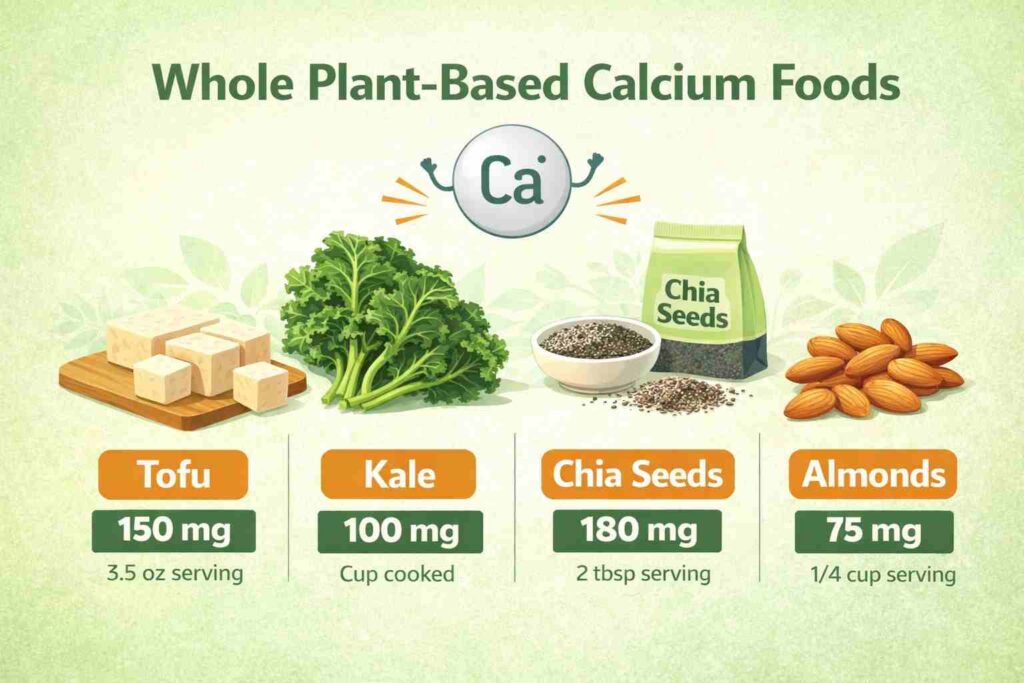
Calcium-Set Tofu (½ cup – 350–400 mg)
- One of the highest natural vegan calcium sources.
- Provides complete protein and iron.
- Works well in curries, stir-fries, and salads.
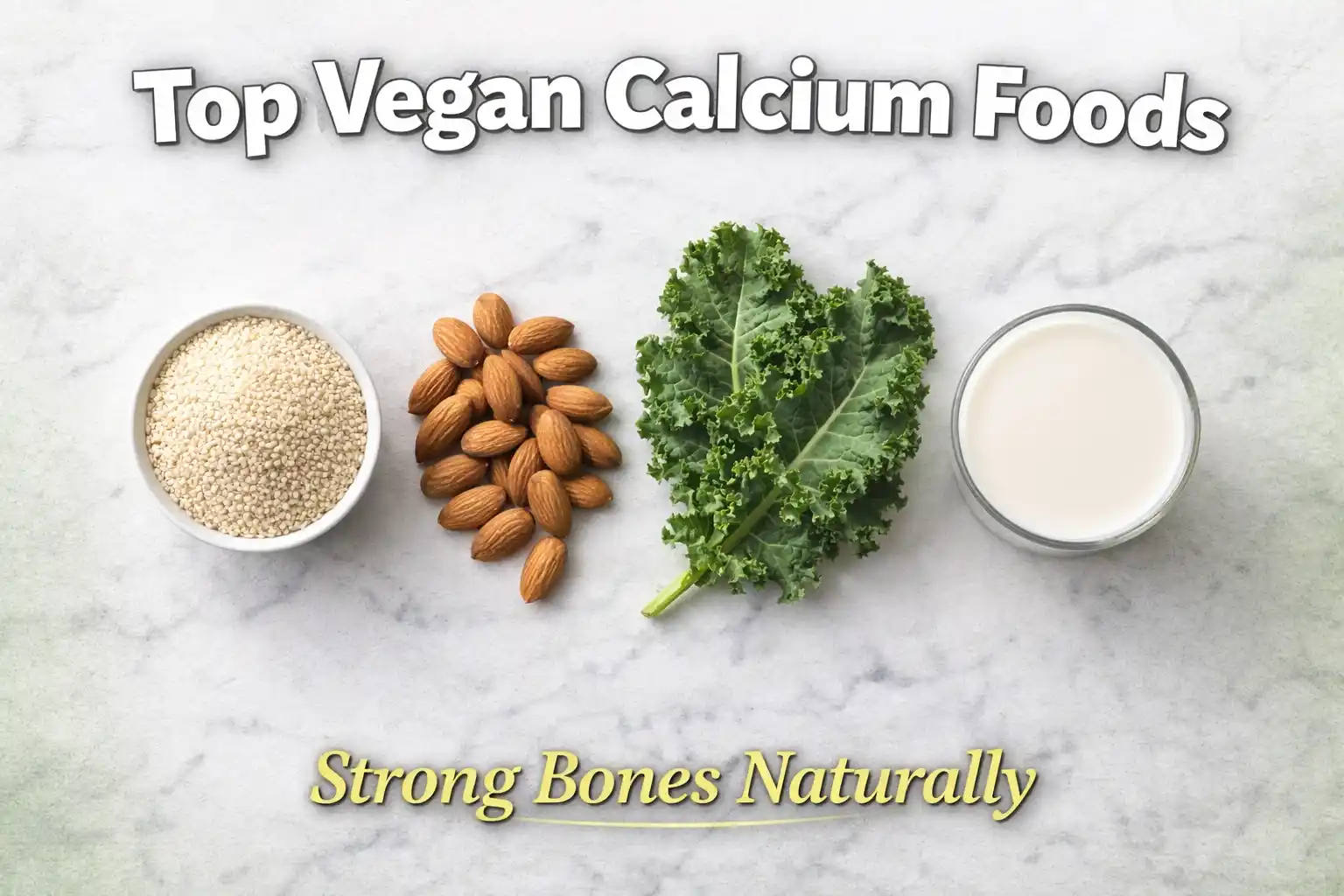
Kale (1 cup cooked – 180 mg)
- Low oxalate, so calcium absorbs easily.
- Rich in vitamin K, which supports bone formation.
- Easy to add to soups, dals, or sautéed dishes.
Bok Choy (1 cup cooked – 160 mg)
- Excellent for calcium absorption.
- Contains folate and vitamin C for immunity and cell repair.
- Great in stir-fries, broths, and mixed vegetables.
Chia Seeds (2 tbsp – 180 mg)
- High in omega-3 fats and fiber.
- Helps improve digestion and reduce inflammation.
- Add to smoothies and puddings, or sprinkle on breakfast bowls.
Almonds (¼ cup – 95 mg)
- Provide vitamin E and magnesium for nerve and muscle function.
- Easy snack or topping for oatmeal and salads.
White Beans (1 cup – 160 mg)
- Offer iron and potassium.
- Good for heart health and energy levels.
- Add to soups, salads, hummus, or grain bowls.
Tahini (2 tbsp – 130 mg)
- Smooth paste made from sesame seeds.
- Provides healthy fats and zinc for immunity.
- Ideal for sauces, dressings, and dips.
Dried Figs (5 pieces – 135 mg)
- Provide fiber for good digestion.
- Offer iron for energy and metabolism.
- Eat as a snack or add to oatmeal and desserts.
Wakame (1 cup – 120 mg)
- A mineral-rich seaweed high in iodine.
- Supports thyroid function and bone health.
- Great in soups, rice bowls, and salads.
These foods fit well into everyday meals—add chia to smoothies, toss kale into curries, or use tofu in stir-fries.
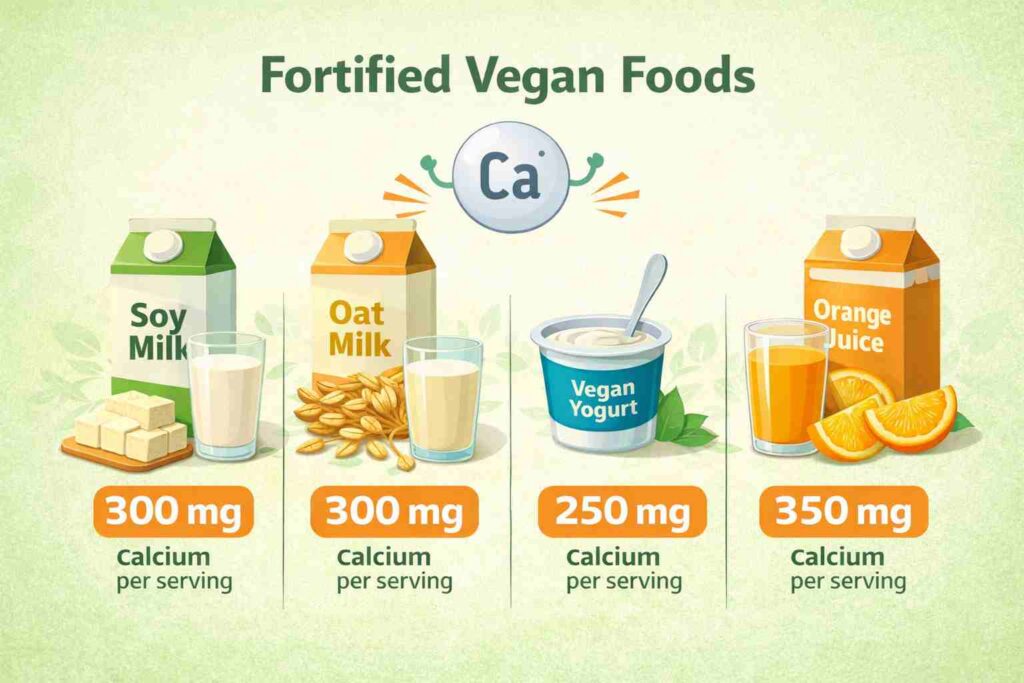
Fortified Calcium-Fortified Vegan Foods
These foods help you reach your daily calcium target even on busy days. Consistency is easy with fortified plant-based milk and vegan yogurt.
Table: Fortified Plant-Based Calcium Foods
Fortified Food | Average Calcium (per serving) | Pro Tip |
Fortified soy milk (1 cup) | 300–450 mg | Choose brands with added vitamin D |
Fortified oat or almond milk (1 cup) | 250–300 mg | Shake well before using |
Fortified orange juice (1 cup) | 300–350 mg | Look for low-sugar options |
Fortified breakfast cereal (1 serving) | 100–200 mg | Check for calcium carbonate |
Fortified vegan yogurt (½ cup) | 150–250 mg | Pair with berries for vitamin C |
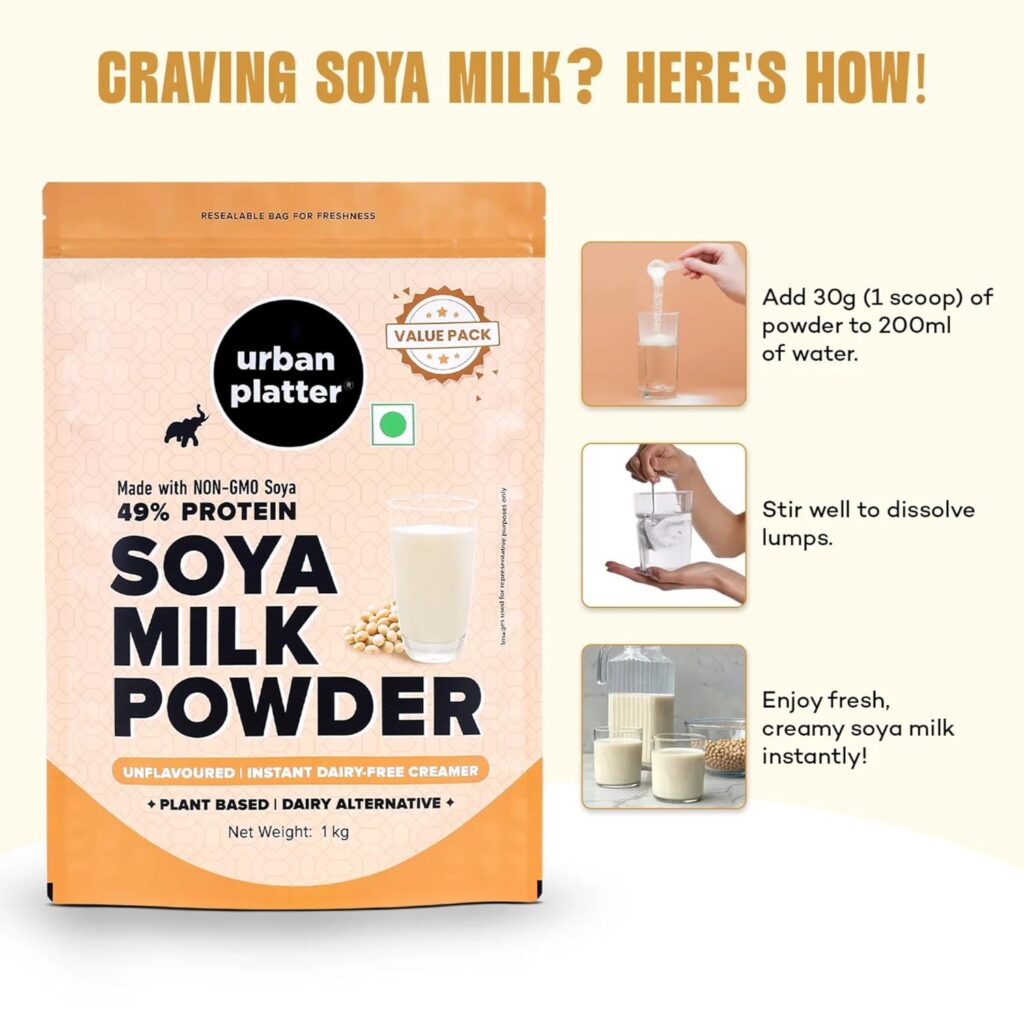
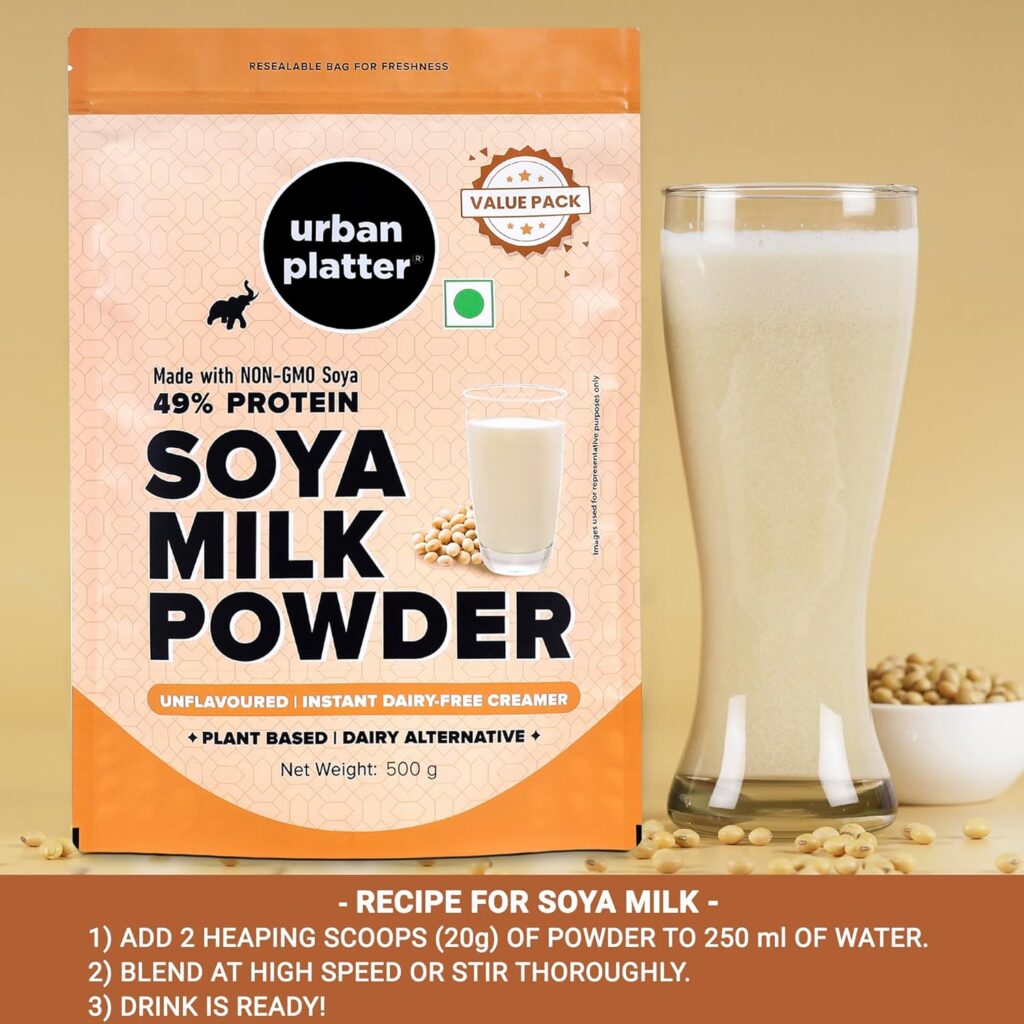
Fortified Soy Milk (1 cup – 300–450 mg)
- Usually the highest-calcium plant milk.
- Added vitamin D improves calcium absorption.
- Ideal for tea, smoothies, or cereal.
Fortified Oat or Almond Milk (1 cup – 250–300 mg)
- Good for people who prefer lighter milks.
- Needs shaking because calcium settles at the bottom.
- Works well in baking, coffee, or porridge.
Fortified Orange Juice (1 cup – 300–350 mg)
- High calcium plus natural vitamin C.
- Picking low-sugar options helps maintain balanced calories.
- Refreshing way to boost breakfast nutrition.
Fortified Breakfast Cereal (1 serving – 100–200 mg)
- Easy morning option for steady calcium intake.
- Check for calcium carbonate in the ingredient list.
- Pair with fortified plant milk for a strong calcium combo.
Fortified Vegan Yogurt (½ cup – 150–250 mg)
- Good source of probiotics for gut health.
- Vitamin C from fruits improves absorption.
- Works as a snack, dessert, or breakfast base.
Quick Comparison Table of the Best Vegan Calcium Sources
Food | Category | Calcium | Absorption Rating |
Tofu | Whole food | 350–400 mg | High |
Fortified soy milk | Fortified | 300–450 mg | High |
Kale | Whole food | 180 mg | High |
Chia seeds | Whole food | 180 mg | Medium |
Almonds | Whole food | 95 mg | Medium |
Vegan yogurt | Fortified | 150–250 mg | High |
Tips to Improve Calcium Absorption on a Plant-Based Diet
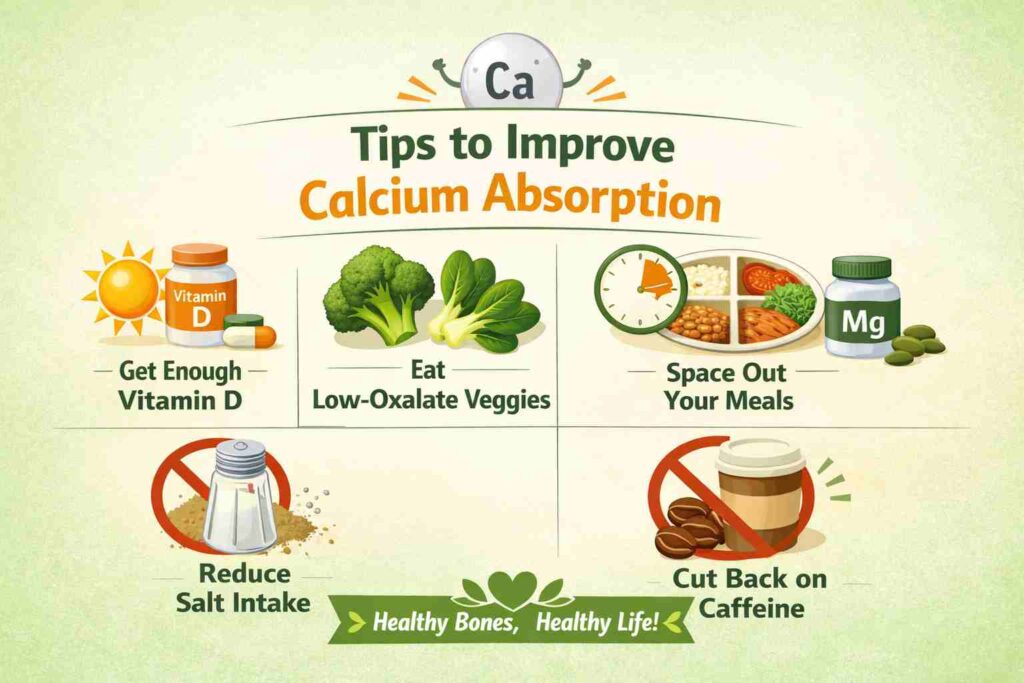
To get the most out of your vegan plant-based calcium food sources, keep these steps in mind:
- Include Low-Oxalate Vegetables
Kale, bok choy, and broccoli offer a highly calcium-absorbing plant diet. - Add Vitamin D Daily
Vitamin D improves calcium absorption. Get sunlight or choose fortified milk.
- Space Out Your Calcium-Rich Meals
Your body absorbs calcium better in smaller amounts throughout the day. - Reduce Excess Caffeine and Sodium
Both increase calcium loss. - Boost Magnesium and Vitamin K Intake
Both support bone health and help calcium work more efficiently.
Common Myths About Calcium on a Vegan Diet
Myth 1 – You need dairy for strong bones.
Fact: You can meet calcium requirements through plant-based calcium foods such as tofu, kale, fortified soy milk, and chia seeds—without dairy.
Myth 2 – Spinach is the best vegan calcium source.
Fact: Spinach is high in oxalates that block calcium absorption. Opt for kale, bok choy, or collard greens instead.
Myth 3 – Vegans are always calcium-deficient.
Fact: Research shows that well-planned vegan diets meet or exceed calcium recommendations, provided fortified foods or supplements are used when necessary.
Myth 4 – All plant milks have calcium.
Fact: Not all do. Only fortified plant milks list calcium in their nutrition labels—always check before buying.
Common Mistakes About Vegan Calcium Sources
Mistake | Impact | Correction |
Relying on unfortified milks | Inadequate intake | Choose fortified brands |
Consuming too much salt or caffeine | Increased calcium loss | Limit to 1–2 cups of coffee/day |
Ignoring vitamin D intake | Poor absorption | Get 20–30 minutes of sunlight or supplement |
Eating all the calcium in one meal | Inefficient absorption | Distribute across meals |
Overeating spinach or beet greens | Blocks absorption | Swap for kale, tofu, bok choy |
Avoiding these pitfalls ensures steady calcium intake and better bone density over time.
Living vegan doesn’t mean compromising your bone health. With the right approach, you can easily meet your daily calcium needs through a combination of whole-food vegan calcium sources and fortified plant-based foods. Including options like tofu, leafy greens, tahini, seeds, and fortified plant milk ensures a steady and balanced intake throughout the day.
For better results, pair your calcium intake with vitamin D and magnesium to improve absorption, and avoid common mistakes such as relying only on high-oxalate foods like spinach.
Final Thoughts: Build Strong Bones with Vegan Calcium Sources
Make variety your daily habit. By combining different calcium-rich vegan foods and maintaining an active lifestyle, you can naturally support strong bones while enjoying a balanced plant-based diet.
For more expert guidance, recipes, and practical tips on vegan bone health, calcium-rich foods, and overall nutrition, explore VegGora—your go-to platform for simple, healthy, and sustainable plant-based living.
✅ Want to top up your calcium and vitamin intake? Explore vegan nutrition supplements on Veggora including plant-based calcium and immunity boosters.
Disclaimer:
This content is for educational purposes only and not medical advice. Always consult a healthcare professional or dietitian before making changes to your diet.
FAQs