Pea Milk
A newer option made from yellow split peas. It has a surprisingly high protein content and a neutral flavor.
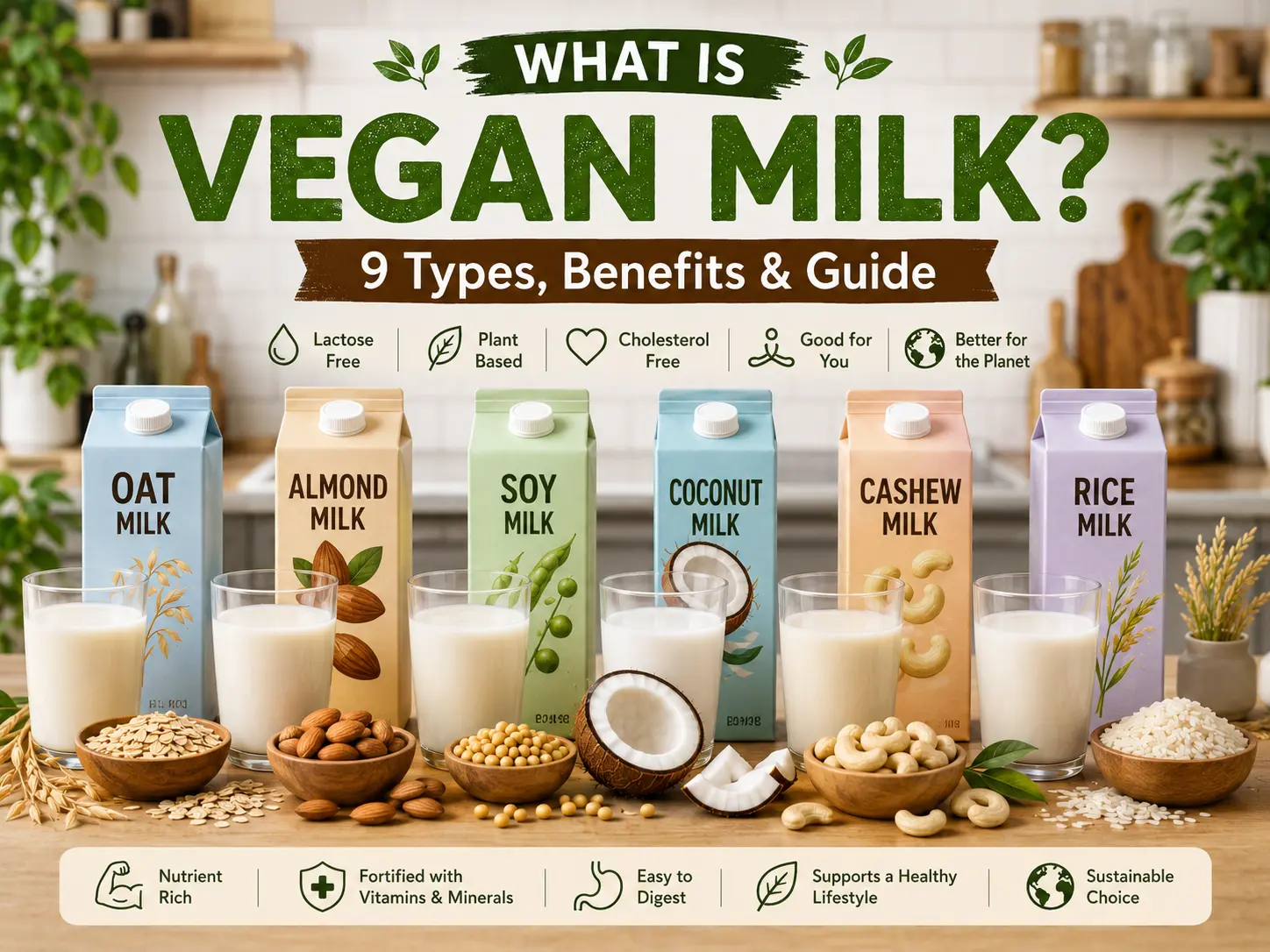
9 Types of Vegan Milk
1. Soy Milk — The Original Plant-Based Milk
Soy milk has been consumed in Asia for centuries, and for good reason. Often considered the original plant-based milk, soy milk offers eight grams of protein per serving and is typically fortified with vitamin D. Its nutritional profile is one of the closest to cow’s milk among all plant-based options.
Soy milk led India’s plant-based milk market with a 65.40% share in 2024, making it the most consumed dairy alternative in the country by a significant margin.
Best for: Cooking, baking, smoothies, and anyone who needs a high-protein dairy substitute.
2. Oat Milk — The Barista’s Favourite
Oat milk has become the darling of coffee shops worldwide, and its rise in India is following the same path. Oat milk currently holds a 12% share of India’s plant-based milk market, but it is gaining traction quickly.
Oat milk contains a good quantity of fatty acids, protein, minerals, vitamins, dietary fiber, and a variety of micronutrients and may provide several health benefits, including reducing blood sugar, lowering cholesterol, and preventing cancer.
One thing worth noting: oat milk is naturally higher in carbohydrates than most other plant milks, which makes it an excellent pre-workout drink but something to moderate if you’re watching your carb intake.
Best for: Coffee, lattes, baking, and anyone with nut allergies.
3. Almond Milk — Light, Low-Calorie, and Popular
Almond milk holds a 31% share of India’s plant-based milk market, and 64% of almond milk drinkers describe it as “very good” — a higher satisfaction rate than any other plant-based milk in India.
Almond milk boasts a creamy texture similar to cow’s milk and delivers a good dose of vitamin E and calcium. However, it is low in protein compared to soy or cow’s milk, which is worth keeping in mind if protein intake is a priority.
Best for: Cereal, smoothies, light baking, and anyone watching their calorie intake.
4. Coconut Milk (Beverage) — Creamy and Flavourful
The carton version of coconut milk is lighter and thinner than the canned variety used in curries. Coconut milk has a naturally light, sweet flavor and is rich in calcium, making it ideal for both cooking and sipping.
It is naturally low in protein, so it works better as a flavoring element than a nutritional staple.
Best for: Smoothies, curries, desserts, and chai alternatives.
5. Rice Milk — Mildest of All
Rice milk has the most neutral, watery taste among all plant milks. It is naturally free from nuts, soy, and gluten — making it a safe option for people with multiple food allergies. However, it is the lowest in protein and tends to have a higher glycaemic index.
Best for: People with multiple allergies who need a simple, inoffensive dairy alternative.
6. Cashew Milk — Rich and Indulgent
Cashew milk is arguably the creamiest plant-based milk available. Its naturally sweet, velvety texture makes it exceptional in desserts and coffee creamers. The downside is price — cashews are among the more expensive raw ingredients, which makes cashew milk a premium option.
Best for: Desserts, ice cream bases, creamy soups, and specialty coffee drinks.
7. Hemp Milk — Nutritious and Allergy-Friendly
Hemp milk is made from shelled hemp seeds and is free from soy, nuts, and gluten. Hemp milk is packed with essential nutrients and free from soy, nuts, and gluten, making it a great option for those with food allergies or sensitivities.
Hemp seeds are naturally rich in omega-3 and omega-6 fatty acids, which support heart and brain health.
Best for: People with multiple allergies, those seeking omega-rich beverages, and smoothies.
8. Pea Milk — The High-Protein Newcomer
Pea milk is made from yellow split peas and has one of the highest protein contents among all plant-based milks — comparable to soy milk. It has a neutral flavor and blends well in recipes without altering the taste. It’s still a niche product in India but gaining ground in health-focused urban markets.
Best for: High-protein diets, post-workout drinks, and cooking.
9. Hazelnut Milk — The Premium Choice
Hazelnut milk is projected to expand at a 19.29% CAGR in India’s plant-based milk market, driven by consumer preference for indulgent yet nutritious nut-based beverages and its premium positioning among health-conscious consumers.
Its rich, nutty flavour pairs beautifully with coffee and chocolate-based drinks.
Best for: Specialty coffee, dessert drinks, and consumers looking for premium plant-based options.
Vegan Milk vs Cow's Milk: How Do They Actually Compare?
Among plant-based choices, soy milk and pea-protein milk are closest to cow’s milk in terms of protein, with soy containing all essential amino acids similar to cow’s milk.
Almond milk is generally low in protein and fat. Oat milk contains moderate protein with relatively low saturated fat. Rice milk is low in protein and higher in carbohydrates.
One important nuance: most plant-based milks don’t naturally contain the same levels of calcium, vitamin D, and B12 as cow’s milk. Fortification plays a crucial role in filling those nutritional gaps. If you’re making a full switch to plant-based eating, it’s also worth exploring vegan fish alternatives and vegan prawns to ensure you’re covering your full nutritional needs.
The practical takeaway? Always choose a fortified plant-based milk and go unsweetened whenever possible.
Is Vegan Milk Healthy?
The honest answer is: it depends on the type and the brand.
Plant-based dairy alternatives are popular for offering various health benefits, especially for those seeking low saturated fat consumption, lactose-free intake, and high antioxidant properties.
For specific health conditions:
Diabetes: Including dairy substitutes such as almond milk and unsweetened soy milk, which contain healthy nutrients, vitamins, a lower glycaemic index, and low carbohydrates compared with traditional cow’s milk, can help maintain nutritional balance.
Arthritis: Plant-based dairy substitutes play a vital role in helping manage arthritis symptoms, as these alternatives are packed with nutrients, anti-inflammatories, antioxidants, polyphenols, and vitamins.
Lactose intolerance: Since vegan milk contains no lactose by definition, it eliminates the bloating, cramping, and digestive discomfort that affects a significant portion of the Indian population.
That said, not all vegan milks are equal. Highly sweetened varieties can contain significant added sugar. Always check the label and opt for unsweetened versions when possible.
What Is Vegan Milk Used For?
Vegan milk is remarkably versatile. Here’s how different types work best in everyday use:
In chai and coffee: Oat milk and soy milk are the most popular choices. Oat milk froths beautifully for lattes; soy milk holds up well with heat.
In cooking and baking: Soy milk is the closest behavioral match to cow’s milk when heated. Coconut milk adds a rich, tropical depth to curries and desserts.
In smoothies: Almond, cashew, and oat milk all work beautifully. Each adds its own subtle flavor to the blend.
Straight from the glass: Hemp milk and oat milk are the most enjoyable on their own, with natural sweetness and a satisfying mouthfeel.
For vegan baking specifically, a good kitchen setup makes all the difference — our Borosil OTG Oven for Vegan Baking is a popular pick among plant-based home cooks on VegGora.
Vegan Milk in India: Where to Buy and Which Brands to Try
Major plant-based milk brands available in India include Sofit, Epigamia, So Good, Oat Mylk, Raw Pressery, Urban Platter, and Silk. These are readily available on online shopping platforms including Amazon, VVegano, Vegan Dukan, Vegan Mall, and Nature’s Basket.
The broader plant-based dairy category in India includes over 45 brands and 223 SKUs, ranging from milk alternatives to yogurt, butter, cheese, and more — making it the most developed segment in the Indian plant-based food market.
Pricing remains a barrier for many consumers, with affordability being the single most important factor influencing the switch between brands, followed by availability. One in four consumers also makes plant-based milk at home due to constraints of affordability and availability.
Making oat milk or almond milk at home is actually straightforward — soak, blend, strain — and significantly cheaper than store-bought versions.
How to Choose the Right Vegan Milk for You
With nine types to choose from, here’s a simple decision framework:
Need high protein? → Go with soy or pea milk Want it for coffee? → Oat milk or barista-grade soy milk Watching calories? → Unsweetened almond milk Have nut allergies? → Oat milk or rice milk Love creamy texture? → Cashew milk Cooking Indian dishes? → Coconut milk Want omega-3 benefits? → Hemp milk Looking for premium options? → Hazelnut milk
One universal tip: always choose the unsweetened version of any plant-based milk. Sweetened varieties often contain added sugars that add unnecessary calories without nutritional benefit.
Final Thoughts
Vegan milk is no longer an alternative for the few — it’s a genuine, delicious, and practical choice for anyone looking to reduce dairy, manage lactose intolerance, or simply explore what the plant world has to offer. With over nine types now widely available in India and a market growing rapidly year over year, there’s never been a better time to make the switch.
Start with what fits your daily routine — a soy milk chai in the morning, an oat milk latte midday, or a coconut milk smoothie after a workout. Explore the full range of dairy alternatives at VegGora and find what works best for you.
The best vegan milk is simply the one you’ll actually enjoy drinking.
.