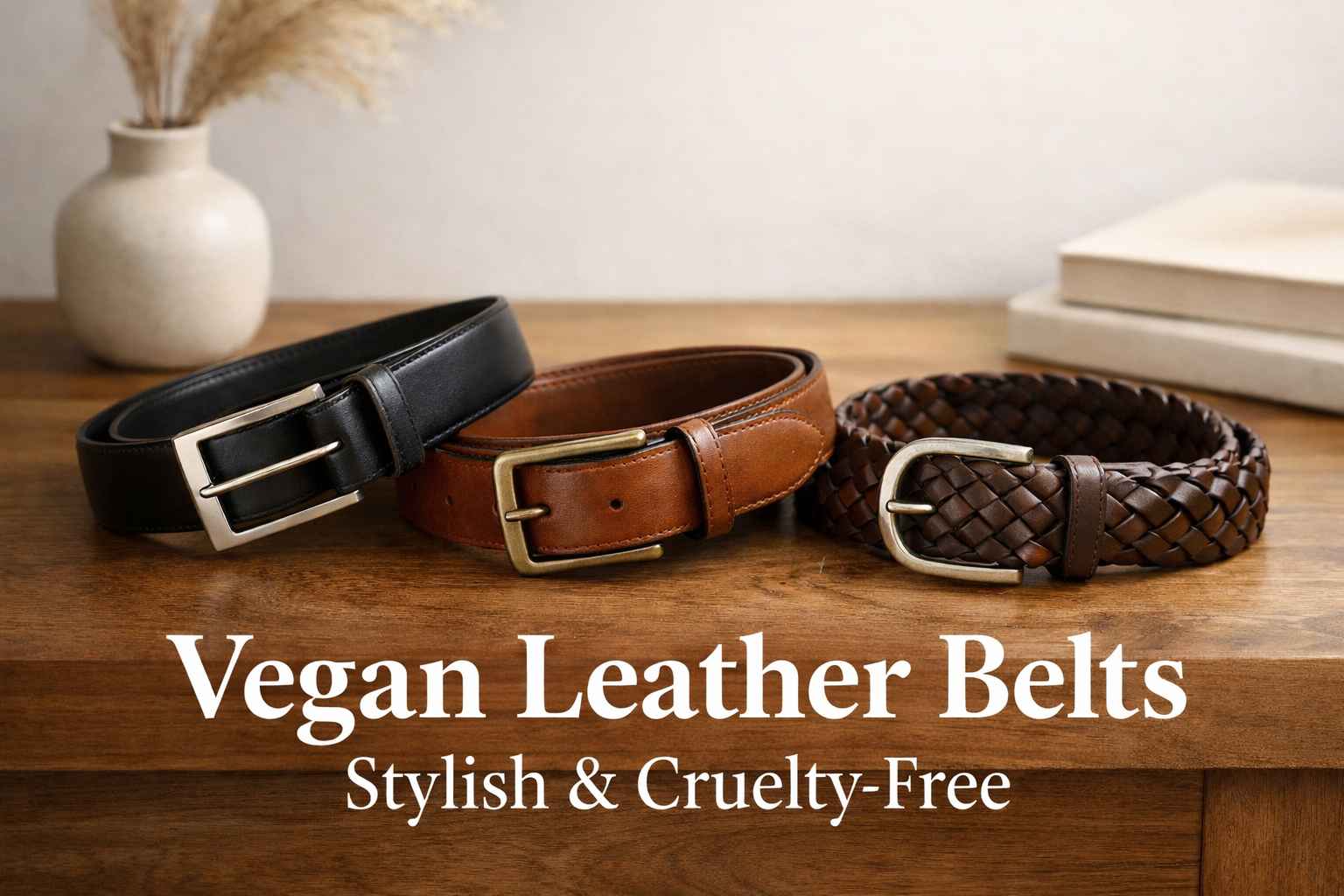
Vegan leather belts are stylish, cruelty-free alternatives to animal leather, made from materials like PU, Piñatex, mushroom leather, and cactus leather. They look and feel just like real leather — but involve zero animal harm and significantly less environmental damage. Available in 7 premium styles — from classic formal to automatic buckle — they suit every occasion and wardrobe. While real leather lasts longer, quality vegan options offer years of reliable wear with minimal maintenance and effortless cleaning. Whether you’re an ethical consumer, a budget-conscious buyer, or a fashion enthusiast — a vegan leather belt delivers on style, conscience, and everyday practicality.
What Is a Vegan Leather Belt?
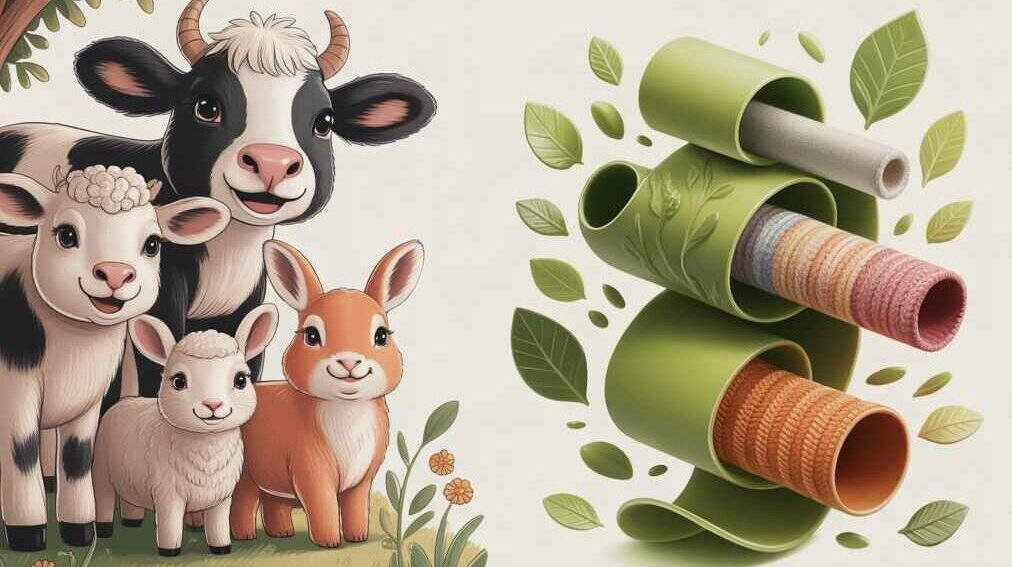
A vegan leather belt is a belt crafted entirely from plant-based or synthetic materials — with zero animal products involved at any stage of production. No cowhide. No pigskin. No animal-derived components whatsoever.
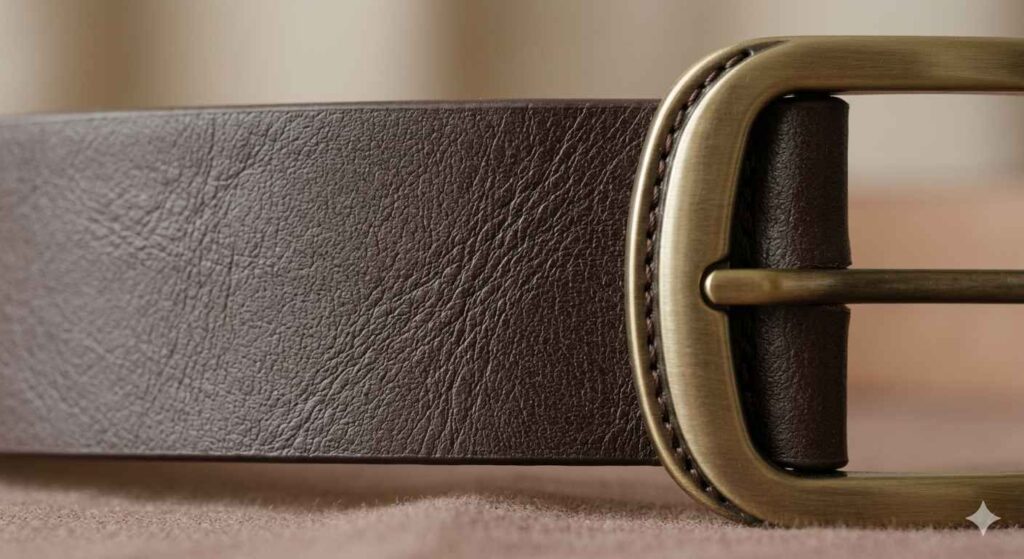
These belts are designed to replicate the texture, appearance, and durability of conventional leather while keeping the production process cruelty-free. Whether made from polyurethane, pineapple fibres, cactus leaves, or recycled plastics, a vegan leather belt looks like the real thing — and increasingly, it feels like it too.
Vegan Leather Belt — Quick Overview
Key Features of Vegan Leather Belts
Vegan leather belts share several defining characteristics that make them a compelling choice for modern consumers:
They are cruelty-free — no animals are harmed or slaughtered in their production. They carry a leather-like appearance, with textures, grains, and finishes that closely mimic conventional animal leather. And they are notably lightweight and versatile — available in a wider range of colours, finishes, and styles than traditional leather typically allows, since the material can be engineered to specification rather than relying on natural animal hides.
Why Vegan Leather Belts Are Trending
Ethical fashion is no longer a fringe concern — it’s a mainstream buying consideration, particularly among younger demographics. According to a 2024 report from Springer Nature Link, 65% of Gen Z consumers said climate change causes them daily stress, directly influencing their purchasing behaviour toward more sustainable products.
The vegan leather accessories market, which includes belts, wallets, and small goods, was valued at $1.1 billion in 2023 and is forecast to reach $2.7 billion by 2030, growing at a CAGR of 11.9%, according to market data compiled by Best Colorful Socks citing multiple industry reports.
Three factors are driving this growth simultaneously: ethical fashion awareness, affordability compared to premium animal leather, and genuine advances in modern materials that make plant-based and synthetic alternatives visually and functionally competitive.
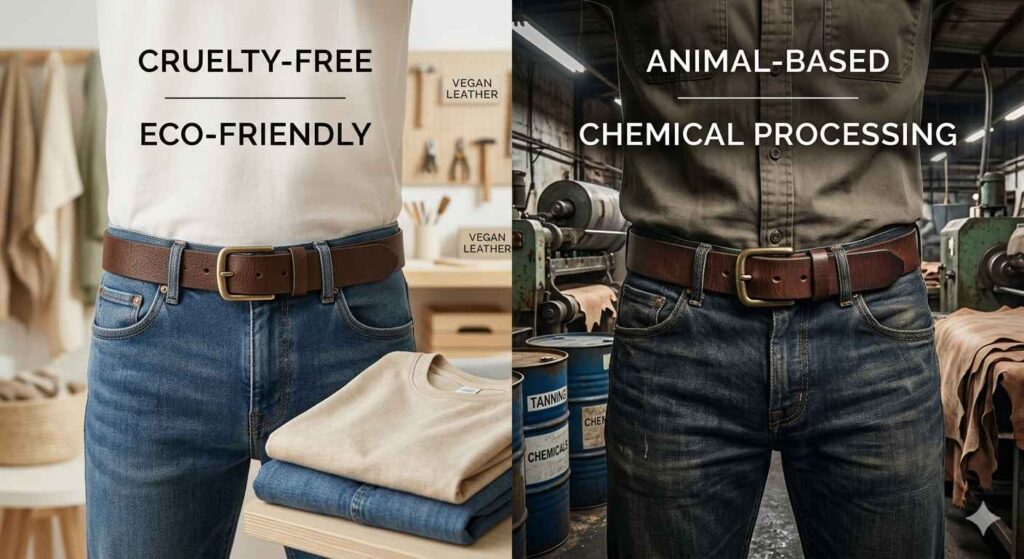
Fact backed by research: According to a European Commission-backed report cited by Faunalytics, tanning just 1 kg of animal leather uses up to 250 litres of water and generates up to 6.1 kg of solid waste — a resource burden that vegan leather production significantly reduces, particularly for plant-based options like cactus and pineapple leather.
What Is a Vegan Leather Belt Made Of?
This is where the category gets genuinely interesting. “Vegan leather” is a broad term covering a wide range of materials with very different properties, price points, and sustainability profiles.
Synthetic Materials (PU, PVC)
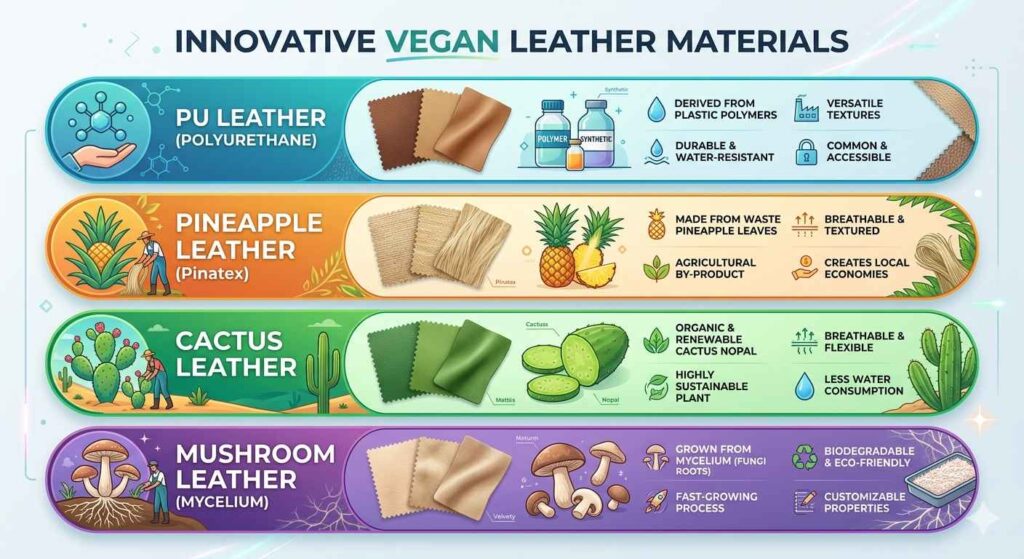
Polyurethane (PU) and Polyvinyl Chloride (PVC) are the most commonly used materials in vegan leather belts worldwide. They are produced by applying a synthetic polymer coating to a fabric base — typically polyester or cotton — creating a smooth, flexible surface that closely replicates the visual and tactile properties of animal leather.
PU leather is the more widely preferred of the two. It is softer, more breathable, and considered less environmentally harmful than PVC, which contains chlorine compounds that can release toxic by-products. Both materials are affordable and widely accessible, making them the dominant choice across the mass-market vegan belt segment. The trade-off is that these are petroleum-derived plastics — they do not biodegrade readily, and lower-quality versions can peel or crack within 2–5 years of use, according to multiple durability assessments including those published by I Am Going Vegan and Hoplok Leather.
Plant-Based Materials
The more exciting — and more sustainable — end of the vegan leather belt spectrum is plant-based materials. Three deserve particular attention:
Piñatex (Pineapple Leather) is made from the fibres of pineapple leaves, which are a by-product of pineapple farming in the Philippines. Developed by Dr. Carmen Hijosa of Ananas Anam, Piñatex uses 27 million tonnes of pineapple leaf waste produced annually without requiring any additional land, water, or pesticides for the raw material. According to published data from Ananas Anam via Alternative Leathers Co., Piñatex production emits just 2.69 kg of CO₂ per square metre — 90% less than animal leather. It has been used by over 1,000 brands worldwide including Nike, Hugo Boss, H&M, and Hilton Hotels.
Mushroom Leather (Mycelium) is one of the most innovative materials in fashion right now. Made from mycelium — the thread-like root structure of fungi — it is grown in controlled environments using agricultural waste like sawdust, bran, and corn husks. MycoWorks, a leading mycelium leather company, states that their flagship material Reishi has a carbon footprint of between 2.76–5 kg CO₂ per square metre and is produced using a plastic-free process. According to ScienceDirect report on mycotextiles, luxury brands including Hermès, Stella McCartney, Balenciaga, and Adidas have all adopted mycelium leather into their product lines.
Apple Leather is produced from apple cores and peels discarded by the juice and food processing industries — converting food waste into a usable textile with a smooth, supple finish and a relatively low environmental footprint.
Which Material Is Best?
It depends entirely on what you prioritise. If durability is your top concern, high-quality PU leather or microfibre blends are the most reliable everyday options right now. If sustainability is your primary driver, plant-based materials like Piñatex, apple leather, or cactus leather carry significantly smaller environmental footprints. If budget is the deciding factor, PU leather offers the best value for money across the mid-market range. The honest answer: the best material is the one that best matches your values, your use case, and your budget — there is no single universal winner.
7 Premium Vegan Leather Belt Styles You Must Try
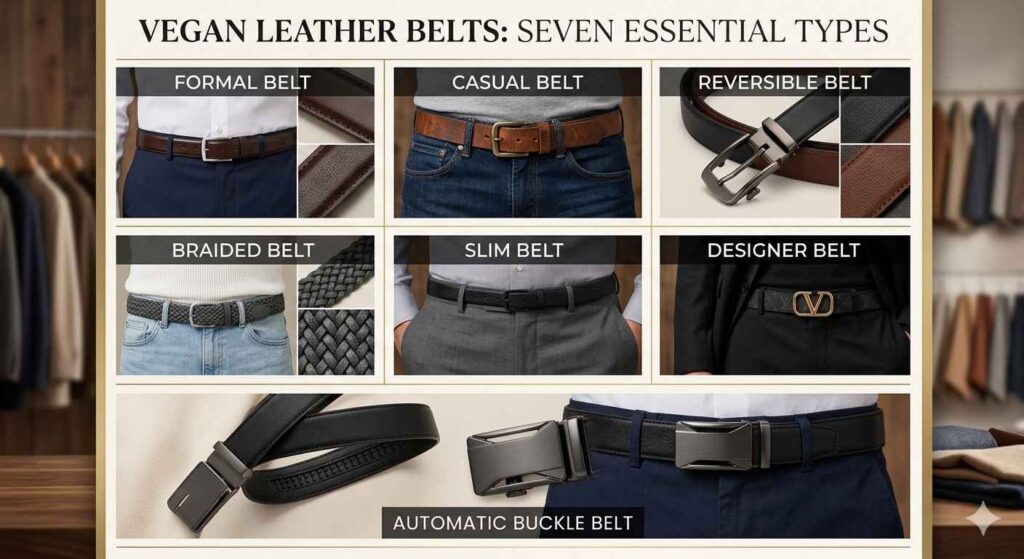
This is the heart of the guide. Here are seven distinct styles of vegan leather belt — each suited to different occasions, aesthetics, and lifestyles.
1. Classic Formal Belt
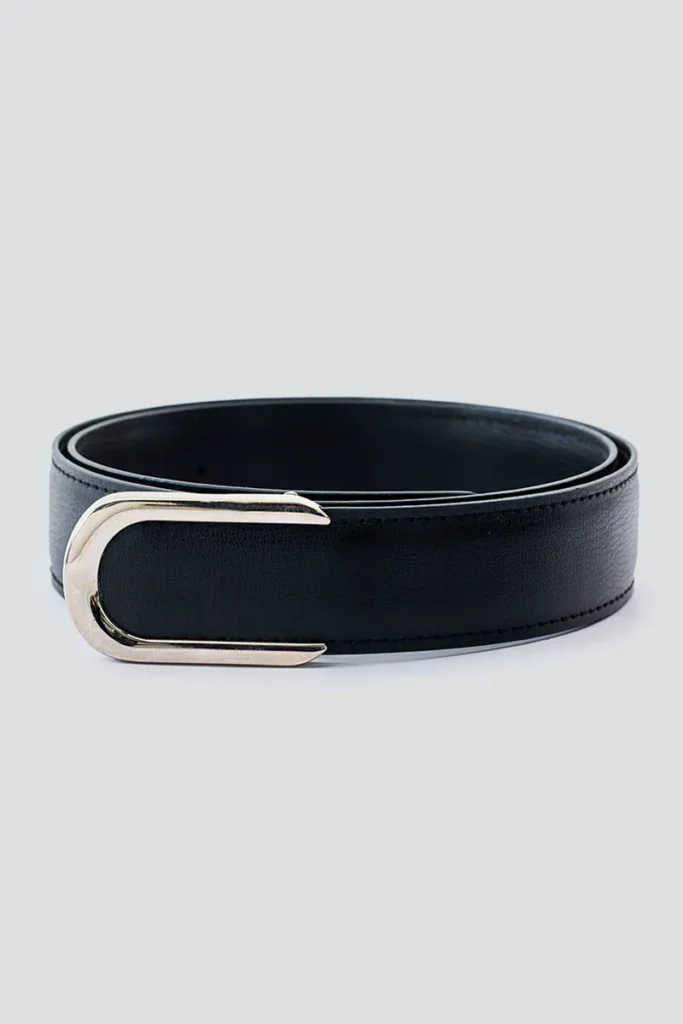
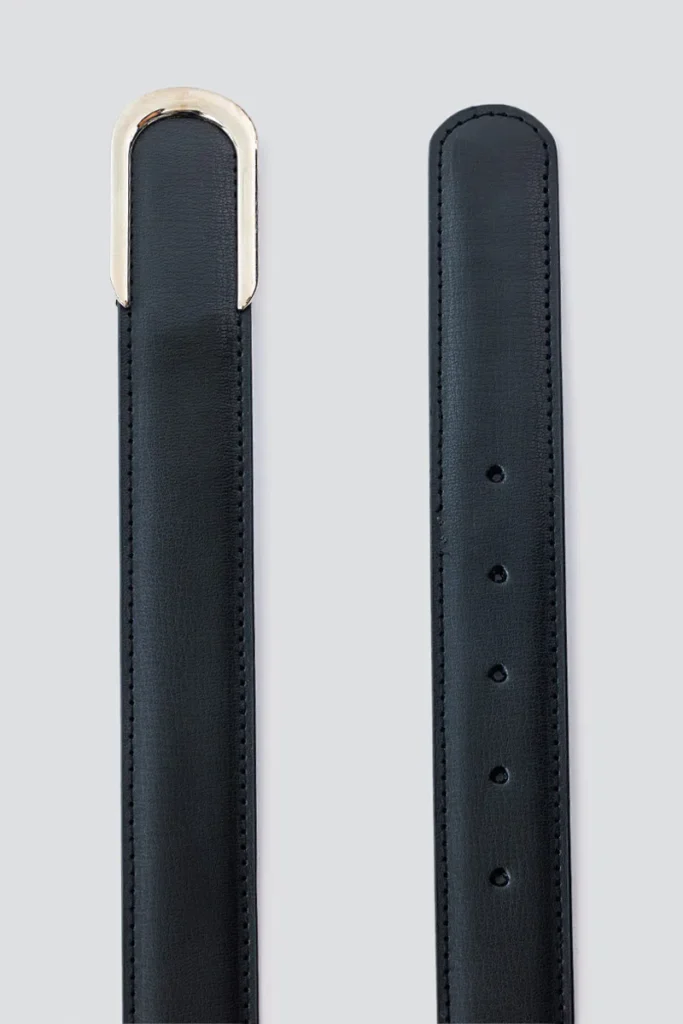
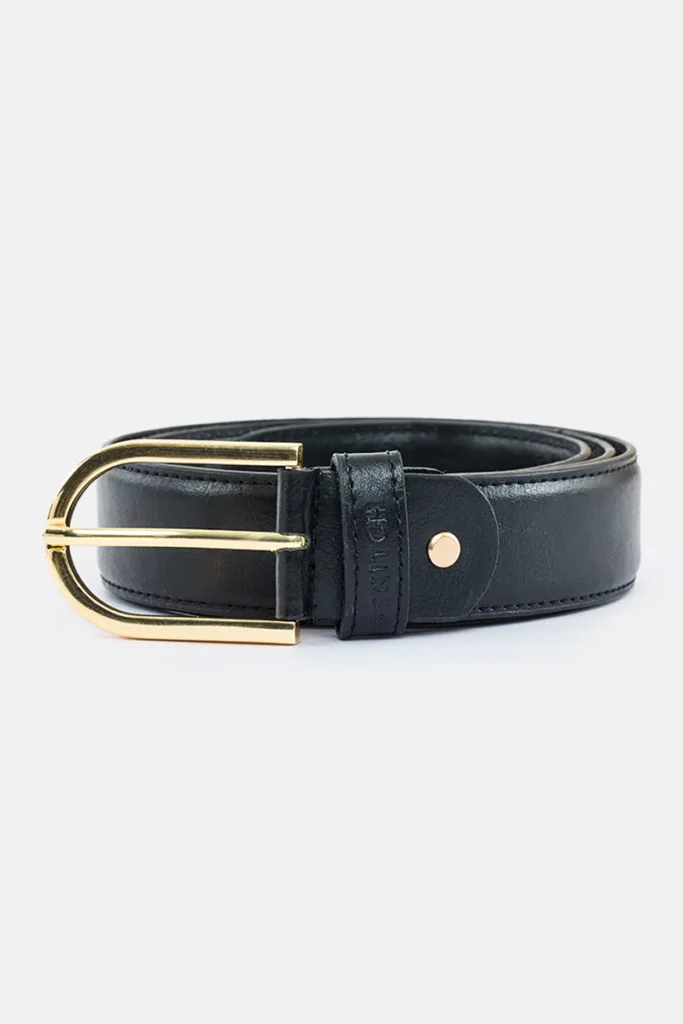
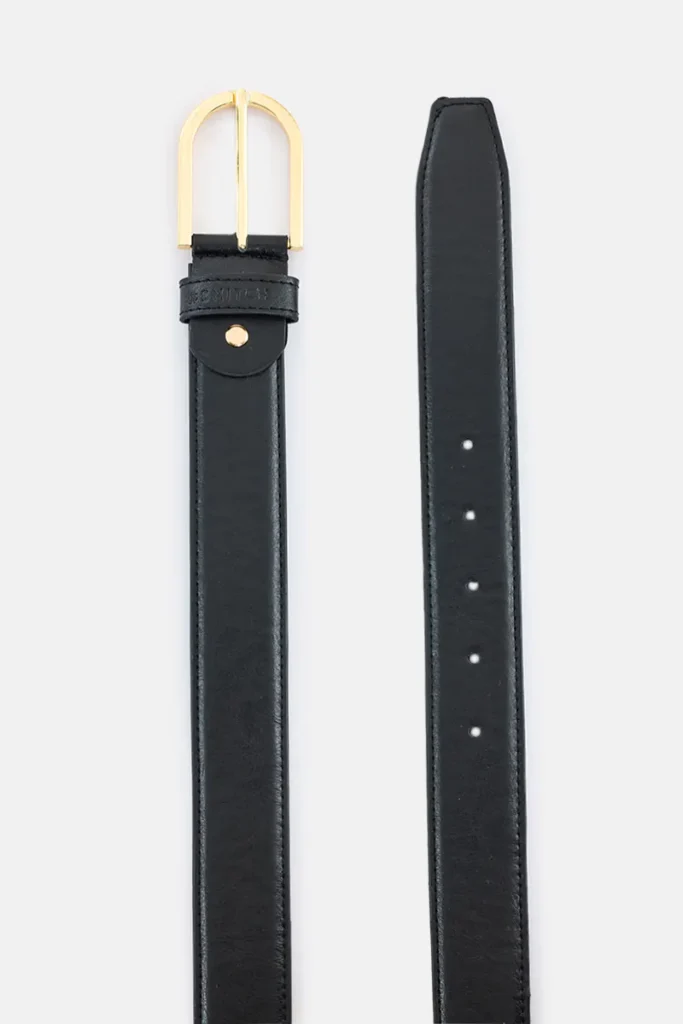
The classic formal belt is the one you reach for with dress trousers, a suit, or smart workwear. Typically 30–35mm wide, finished in black or dark brown, with a simple rectangular or oval buckle in silver or gold-tone hardware — this style is the foundation of any professional wardrobe.
In vegan leather, this style works brilliantly in PU leather or microfibre. The smooth, consistent surface of vegan leather actually suits the clean, uniform look required of formal accessories better than natural leather, which carries variations in grain and texture. Look for belts with reinforced stitching at the buckle bar and at least 5 punch holes for adjustability. For office wear specifically, a matte finish reads more professional than a high gloss.
2. Casual Everyday Belt
The casual belt is probably the one you’ll wear most — with jeans, chinos, or weekend wear. This style tends to be slightly wider (35–40mm), is available in a broader range of colours, and often features more relaxed hardware in brushed or antique-finish metal.
This is the category where vegan leather truly shines for value. The wide colour range — including earthy tones, classic tan, navy, and even bold fashion colours — is possible precisely because the material can be dyed and finished to specification, unlike natural hides. A quality PU leather casual belt in a tan or cognac finish is genuinely difficult to distinguish from its animal leather equivalent.
3. Reversible Vegan Belt
The reversible vegan belt is one of the smartest accessories you can own. It features two different colours on opposite sides — typically black on one side and brown or tan on the other — along with a rotating buckle that allows you to flip the belt without removing it.
For travellers or people who want maximum wardrobe efficiency from a single accessory, this is the ideal pick. One belt handles both formal and casual contexts, both dark and light outfit palettes. Quality reversible vegan belts use a bonded or layered construction that holds both sides firmly while remaining thin enough to sit neatly in belt loops.
4. Braided Vegan Belt
Braided belts are woven from strips of vegan leather into an interlocked pattern, giving them a distinctive textured appearance and — crucially — natural stretch. Unlike a punch-hole belt that can only be fastened at specific intervals, a braided belt can be tightened to any position, making it significantly more comfortable for extended wear.
According to the global leather belts market report by Coherent Market Insights, braided and woven belt styles are growing in popularity particularly for casual and semi-formal fashion — fitting neatly into the broader trend toward comfort-led accessories. These are excellent for warm-weather wear and casual Friday office environments.
5. Minimalist Slim Belt
The minimalist slim belt — typically 20–25mm wide — is a fashion-forward choice designed to sit neatly with high-waisted trousers, tailored pieces, and smart-casual outfits where a standard belt would visually overpower the look.
This style has gained significant traction in contemporary women’s fashion in particular, where belts have moved from purely functional to genuinely decorative. In vegan leather, slim belts are available in an impressive range of finishes — patent, matte, woven, croc-embossed — giving them genuine versatility. A slim black vegan leather belt in a patent or semi-gloss finish is one of the most quietly stylish accessories available at any price point.
6. Designer Vegan Belt
The designer vegan belt occupies the premium end of the market — and it’s a category that has grown considerably. Brands including Stella McCartney, Will’s Vegan Store, and Votch have established themselves as credible luxury vegan leather belt makers, with products that compete directly with conventional luxury leather goods on quality, finish, and visual impact.
The global luxury vegan leather segment was valued at $1.9 billion in 2024 and is projected to reach $4.5 billion by 2031, at a CAGR of 10.6%, according to market analysis cited by Best Colorful Socks. That growth signals that consumer appetite for premium, cruelty-free fashion accessories is genuine and sustained. Designer vegan belts typically use microfiber leather, Piñatex, or high-grade PU with substantial buckle hardware and exceptional edge finishing.
7. Automatic Buckle Belt
The automatic buckle belt — also called a ratchet belt — uses a sliding mechanism rather than traditional punch holes. A lever release allows the strap to be adjusted in tiny increments, meaning the belt fits with precision rather than defaulting to the nearest fixed hole.
This style has become increasingly popular in men’s formal wear, particularly as more people demand comfort from traditionally stiff accessories. The mechanism is embedded in the buckle itself, and the strap end can typically be trimmed to length with scissors, making it customisable at home. In vegan leather, the ratchet belt is a genuinely superior everyday formal option — no more fighting with that one hole that’s too tight and the next one that’s too loose.
Vegan Leather Belt vs Real Leather Belt
Key Differences
The most fundamental difference is the source material: animal leather comes from the processed hide of slaughtered animals — predominantly cattle — while vegan leather uses synthetic or plant-based alternatives. Beyond ethics, the two materials differ in production processes, environmental impact, maintenance requirements, and long-term durability.
Durability Comparison
Real leather, at the full-grain quality tier, is genuinely more durable in the very long term. A 2024 Textile Institute study found leather products showed minimal damage after five years of daily use, and The Leather Working Group reports that full-grain leather retains 85% of its strength after a decade, as cited by Dooney & Bourke’s material research.
Standard PU vegan leather typically lasts 2–5 years under regular use, with lower-quality PVC versions showing visible wear within 12–24 months, according to assessments by Hoplok Leather and szoneierleather.com. However, durability is highly dependent on material quality and construction — a cheap genuine leather belt will degrade faster than a well-made PU belt. As Oliver Co. London notes in their material research: “A cheap leather will almost certainly degrade quicker than a high-quality PU (vegan) leather.”
Newer plant-based materials like Desserto cactus leather have estimated lifespans of around ten years, narrowing the gap with conventional leather considerably.
Cost & Maintenance
Vegan leather belts are consistently more affordable at equivalent quality tiers than their animal leather counterparts, largely because the raw materials and production processes are less resource-intensive. The maintenance story is also strongly in vegan leather’s favour: most vegan leather belts simply need wiping clean with a damp cloth. There are no conditioning requirements, no specialist products needed, and no risk of water damage causing the material to stiffen.
Real leather requires periodic conditioning with leather cream or oil to prevent it from drying out, cracking, or stiffening — an ongoing maintenance cost in both time and money that vegan leather avoids entirely.
Benefits of Vegan Leather Belts
Ethical & Cruelty-Free
The clearest benefit is the most straightforward: no animal is harmed in the production of a vegan leather belt. The global animal leather industry slaughters over one billion animals annually, according to data cited by Species Unite. A vegan belt removes your personal demand from that supply chain. For people who have already adopted cruelty-free diets or lifestyles, extending that principle to fashion accessories is a natural and meaningful step.
Environmental Impact
The environmental case for vegan leather — particularly plant-based varieties — is compelling. Raising livestock for animal leather generates approximately 14.5% of global greenhouse gas emissions, according to the UN Food and Agriculture Organization, as cited by Ethik. The tanning process for conventional leather uses over 175 different chemicals, according to UNIDO, including chromium salts, formaldehyde, and sodium sulfide. Plant-based vegan leathers bypass this entirely — Desserto cactus leather, for example, is certified free of toxic chemicals and phthalates by OEKO-TEX and USDA standards.
Style & Affordability
Vegan leather belts offer something conventional leather struggles to match: design flexibility. Because the material is engineered rather than derived from a natural hide, it can be produced in any colour, any grain pattern, any finish — from patent to matte to embossed croc-effect — without compromise. This creative freedom makes vegan leather belts genuinely trendy and fashion-forward in a way that raw animal leather, with its natural variations, cannot always achieve on demand.
Are Vegan Leather Belts Durable?
Lifespan & Wear
The honest answer: it depends on the material. Standard PU leather belts typically last 2–5 years with regular daily use, according to multiple industry sources including I Am Going Vegan and Hoplok Leather. This is considerably shorter than high-grade genuine leather, but comparable to or better than mid-range genuine leather at similar price points. For many consumers, the lower cost of vegan leather belts means they can be replaced at the end of their lifespan without significant financial impact.
PU vs Plant-Based Durability
PU leather is currently the most durability-tested vegan leather for everyday accessories. Its polymer structure makes it resistant to moisture and surface scratches in normal use. Plant-based options like Piñatex and cactus leather are newer — early testing by LuxaTote and other sources suggests a 3–7 year lifespan for cork and Piñatex, comparable to mid-range genuine leather — though long-term real-world data is still being accumulated. Microfibre-based vegan leathers tend to perform best for durability among synthetic options, offering resistance to peeling that standard PU sometimes lacks.
How to Make It Last Longer
Three habits significantly extend the lifespan of any vegan leather belt. First, clean it regularly — wipe with a damp cloth to remove sweat, dirt, and moisture before they work into the surface. Second, store it properly — hang it rather than folding it to prevent crease marks forming at the fold points. Third, rotate your belts — wearing the same belt every single day concentrates wear at the buckle bar and the most frequently used hole; rotating between two or three belts spreads the wear and extends each one’s useful life considerably.
How to Choose the Best Vegan Leather Belt
Check Material Quality
Always look for transparency in material labelling. A quality brand will specify whether the belt is PU leather, microfibre, Piñatex, or another identifiable material — not just “vegan leather.” Thicker materials generally signal better durability. Check the edges: well-finished edge paint or edge stitching is a reliable indicator of overall construction quality.
Buckle Type
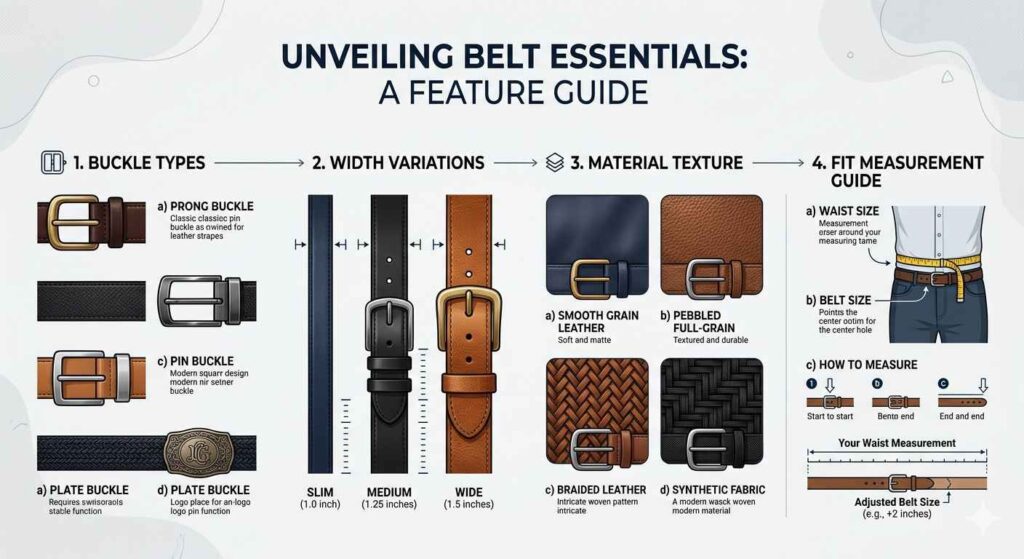
The buckle is the hardest-working component of any belt. For formal wear, a simple single-prong frame buckle in silver or gold is the most reliable and timeless choice. For casual wear, a sliding plaque buckle or D-ring offers style variety. For maximum adjustability and comfort, an automatic ratchet buckle is worth the slight price premium. Always check that the buckle is solid metal rather than hollow-cast — heavier buckles generally indicate better quality.
Fit & Size
Belt sizing is typically based on trouser waist measurement — a belt should generally be purchased in the next size up from your trouser waist to account for the buckle’s position. Most standard belts are 105–120 cm in length, with 5 pre-punched holes. If you fall between sizes, a ratchet belt with adjustable tension removes this problem entirely.
Occasion (Formal vs Casual)
For formal occasions — office work, business meetings, weddings — opt for a smooth-finish belt of 30–35mm width in black or dark brown with understated hardware. For casual settings — weekend wear, travel, relaxed socializing — wider belts, braided styles, and bolder colors all work well. Having one belt for each context is the most practical approach.
Before buying, it’s also helpful to check trusted vegan brands in India that offer quality and durability.
Vegan Leather Belts for Men & Women
Men's Styling Tips
For men, the foundational rule of belt styling is matching the belt to your shoes — both in colour and finish. A matte black vegan leather belt pairs with black leather shoes; a tan or brown vegan leather belt pairs with brown or tan footwear. For formal occasions, keep the buckle simple and understated. For casual wear, a slightly wider belt in a cognac or mid-brown tone works with most denim and chino combinations. Men’s belts in the accessories market represent a growing ethical fashion segment — Business Research Insights notes that increasing recognition of ethical fashion among male buyers is actively driving demand for sustainable vegan leather alternatives.
Women's Styling Tips
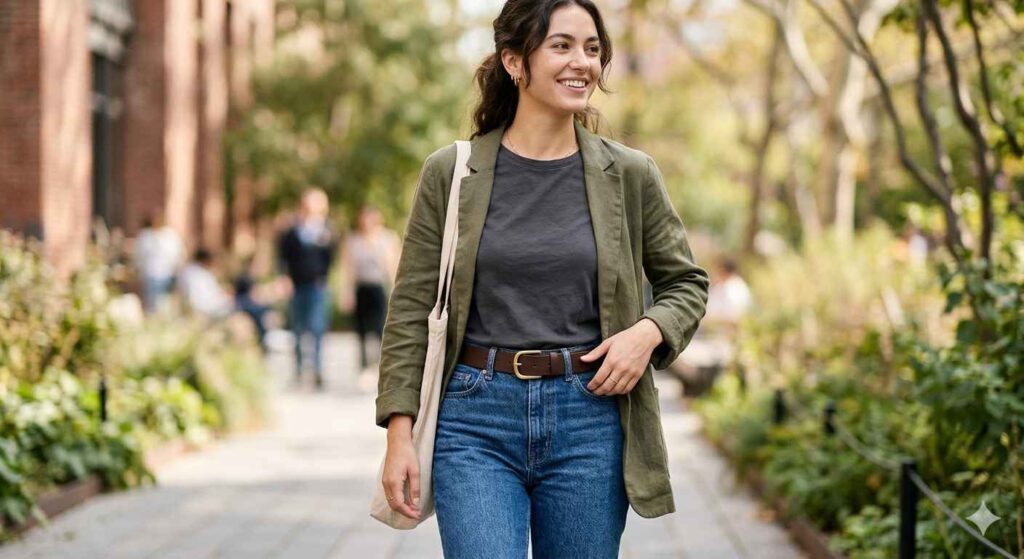
Women’s belt styling is considerably more expressive than men’s, with belts functioning as both functional accessories and outfit focal points. Slim vegan leather belts work brilliantly cinched over midi dresses, blazers, and oversized shirts. Wide statement belts in bold colours or embossed textures add structure to looser silhouettes. Patent finish vegan leather belts in black are among the most versatile — they transition from day to evening without looking out of place in either context.
Unisex Options
Braided vegan belts and minimalist slider belts are genuinely unisex in appeal and fit. So are many reversible belts — the dual-tone functionality makes them practical for anyone who wants wardrobe efficiency. If shopping for a gift or a shared accessory, these styles are the safest and most broadly appealing choices.
Vegan Leather Belts in India
Popular Trends
India’s fashion landscape has shifted meaningfully toward ethical and sustainable consumption. Ethical brands like Ethik — recognised by PETA India as Best Vegan Men’s Shoes brand for 2024 — are actively producing cruelty-free belts and accessories for the Indian market. Plant-based belt styles in tan, cognac, and black are gaining traction in urban centres, driven by social media influence and growing awareness of animal welfare concerns.
Affordable Options
India’s synthetic leather market — which encompasses vegan leather alternatives — was valued at approximately Rs. 31,396 crore (US$3.6 billion) in 2024, according to the India Brand Equity Foundation (IBEF), and is expected to reach Rs. 45,349 crore (US$5.2 billion) by 2033. This scale of domestic production makes quality vegan leather belts accessible at price points that work for a wide range of budgets — from affordable fast-fashion options under ₹500 to premium branded vegan leather belts in the ₹2,000–5,000 range.
Growing Vegan Fashion Market
India is one of the fastest-growing markets for vegan leather in Asia-Pacific. According to Custom Market Insights’ 2025 global vegan leather report, India — alongside China and South Korea — is rapidly adopting plant-based leather across fashion, automotive interiors, and accessories, driven by rising disposable income, urban lifestyle shifts, and increasing awareness of ethical production. Mumbai, Delhi, and Chennai have all emerged as hubs for both vegan leather manufacturing and retail, as noted by Rijac’s analysis of India’s vegan leather trajectory.
Who Should Buy a Vegan Leather Belt?
Ethical Consumers
If animal welfare is important to you — whether you’re fully vegan, vegetarian, or simply trying to reduce the harm your purchases cause — a vegan leather belt is a straightforward and impactful choice. A survey by the Vegan Society, cited by Straits Research, found that 42% of UK consumers have already reduced their consumption of animal products due to ethical concerns. A vegan belt is one of the easiest ways to extend that commitment to your everyday accessories.
Budget Buyers
Vegan leather belts consistently offer better value for money at the £10–£40 price range than comparable animal leather options. The lower cost of materials and simpler production processes translate directly into more accessible pricing. For anyone who wants a smart, presentable belt without spending a significant amount, vegan leather is the practical choice.
Fashion Enthusiasts
The design flexibility of vegan leather — engineered rather than derived from a natural hide — makes it genuinely exciting for fashion-forward buyers. Embossed patterns, patent finishes, bold colours, dual-tone reversible designs — these are all significantly easier to achieve consistently in vegan leather than in conventional hide. If you follow fashion trends and want accessories that reflect them, vegan leather belts give you more options, not fewer.
FAQs
Final Thoughts
Ready to switch to cruelty-free fashion?
Discover our curated collection of vegan products in India including belts, wallets, and more.
Not sure where to start? Explore the best vegan brands in India trusted by conscious consumers.
And if you’re building a complete wardrobe, don’t miss our guide to vegan fashion essentials for a stylish, ethical lifestyle.