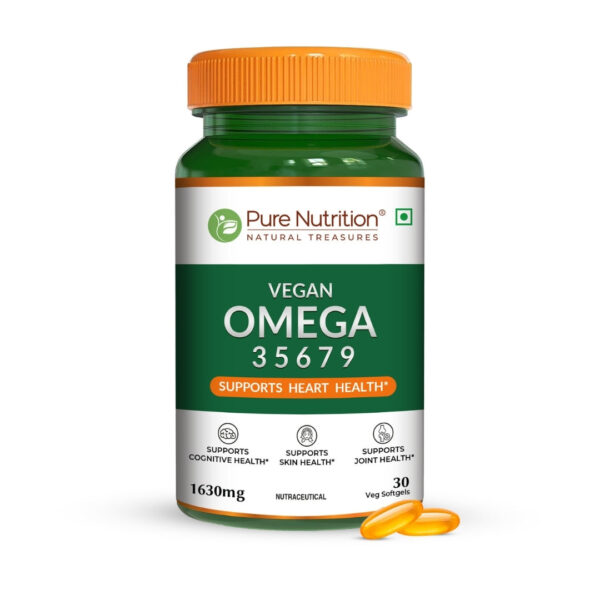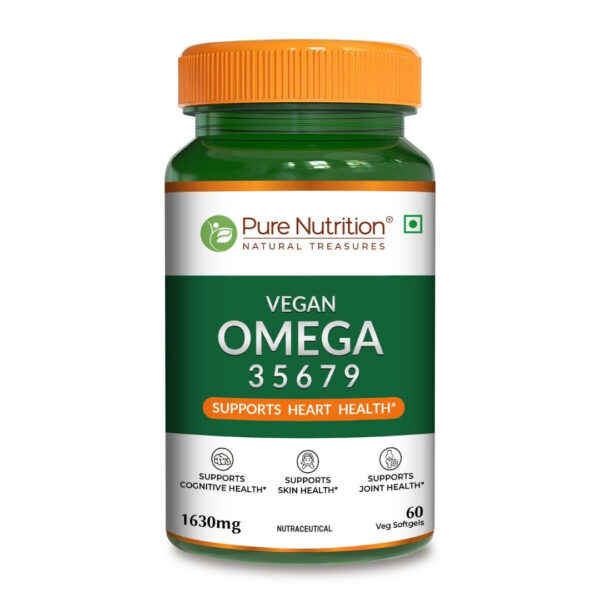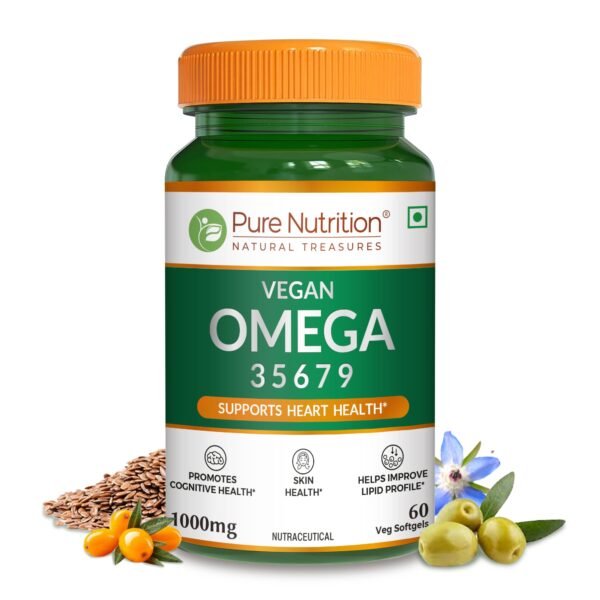


-49% Hot
Price range: ₹359.00 through ₹699.00
-43% Hot

Original price was: ₹699.00.₹399.00Current price is: ₹399.00.

-44% New
Price range: ₹249.00 through ₹449.00
-53% Hot
Price range: ₹300.00 through ₹470.00
 Vegan Food
 Baby & Mom
 Beauty
 Fashion
 Pet & Animal Care
 Health & Wellness
 Home & Cleaning Essentials
Fish oil was always the go to for omega 3. Now it looks like a lot of Indians are moving over to vegan options. Maybe because of how the fish can have mercury and PCBs and heavy metals from the ocean. Algae based capsules seem to skip all that. They still give you the EPA and DHA though. Some people might be doing it for ethical stuff too but that is not the only reason. It is hard to say exactly how big this change is getting..
Shopping for vegan omega 3 gets confusing pretty fast. Most bottles put big numbers on the front like a thousand milligrams total but that hides how little DHA and EPA you actually get. Those two are the ones that matter for your brain and heart and eyes. A flax oil capsule and an algae one can both claim omega 3 yet work differently in the body.
This guide compares options in India by looking at the real DHA and EPA amounts first. Then it checks the algae source and whether any third party tested for purity. Ingredient lists and cost per serving matter more than the sticker price too. Some people might want the highest dose while others look for the cheapest reliable pick or something made locally with Indian certifications.
It seems the recommendations cover a few angles but I am not totally sure how they line up for everyone. That part gets a bit messy when prices change. The algae source comes up again in a few spots though.
Product | DHA (mg) | EPA (mg) | Source | Servings | Certifications | Price | Best For |
Naturaltein Vegan Omega-3 | 500 (per 2 caps) | — | Microalgae | 30 caps | FSSAI, heavy-metal & glyphosate tested naturaltein.in | ₹599 (30 caps) naturaltein.in | India-made budget DHA |
Vegetology Opti3 | 500 | 300 | Microalgae | Varies | Vegan Society approved vegetology.com | Check current listing | Highest DHA+EPA combo |
Doctor’s Best Vegan Omega-3 | 400 | 800 | Algal oil | 2 caps/serving | Third-party tested innerbody.com | ~$0.69–$1.38/serving innerbody.com | Inflammation & joints |
Momentous Vegan Omega-3 | 500 | 500 | Algal oil | 30 servings | NSF Certified for Sport livemomentous.com | $52.95 livemomentous.com | Athletes |
BrainMD Omega-3 Power | ~580 | ~860 | Algal oil | 1.6g total/serving | Third-party tested innerbody.com | Check brand site | Highest overall dose |
New Chapter Vegan Omega-3 Complex | 250 | 125 | Fermented microalgae | 1 softgel/day | NSF Gluten-Free, B Corp newchapter.com | Check brand site | Convenience (1/day) |
Nordic Naturals Algae Omega | 390 | 195 | Microalgae | 2 softgels/serving | Certified vegan livemomentous.com | Check brand site | Balanced everyday use |
Sapling Algae Omega-3 | 300 | 150 | US-grown algae | 60 softgels | GMP, FDA-registered facility amazon.com | Check brand site | No fishy aftertaste |
Micro Ingredients Algae Oil | — | — | Algae (660mg total, incl. DPA) | 3 caps/serving | Budget-tested innerbody.com | ~$26 innerbody.com | Tight budget |
The “total omega-3” number on a label is marketing shorthand. What matters clinically is the split between DHA and EPA, since each does different jobs in the body. A capsule with 1000mg total omega-3 but only 150mg of actual DHA/EPA is a weak product dressed up with a big number.
We prioritized brands that use microalgae or fermented algal oil as the direct source of DHA and EPA, rather than relying solely on ALA-only oils like flaxseed, which the body converts poorly.
We favored brands that publish batch testing for heavy metals (arsenic, cadmium, lead, mercury), oxidation levels, and — in Naturaltein’s case — glyphosate residue, a rare but meaningful test for a supplement sold in India naturaltein.in.
Products that hide behind vague “proprietary omega-3 blend” labeling were deprioritized in favor of brands that break down every fatty acid by name and milligram.
We calculated cost per serving instead of comparing bottle prices, since serving sizes range from one softgel a day to three capsules a day across brands.
Omega-3 fatty acids play important roles in brain, eye, and heart health. DHA (docosahexaenoic acid) is a major structural component of the brain and retina, while EPA (eicosapentaenoic acid) is involved in several processes related to cardiovascular health and inflammation.
If you’re following a vegan or vegetarian diet, you can get ALA (alpha-linolenic acid) from plant foods such as flaxseeds, chia seeds, walnuts, and certain vegetable oils. However, ALA is not the same as pre-formed DHA and EPA, and the body converts ALA into DHA and EPA only in limited amounts. This is why some people following a plant-based diet may choose an algae-based vegan DHA supplement in India to obtain a direct source of DHA, and in some products, EPA as well.
For pregnancy, omega-3 requirements can differ, so pregnant individuals should discuss the appropriate DHA/EPA intake and supplement choice with their healthcare professional.
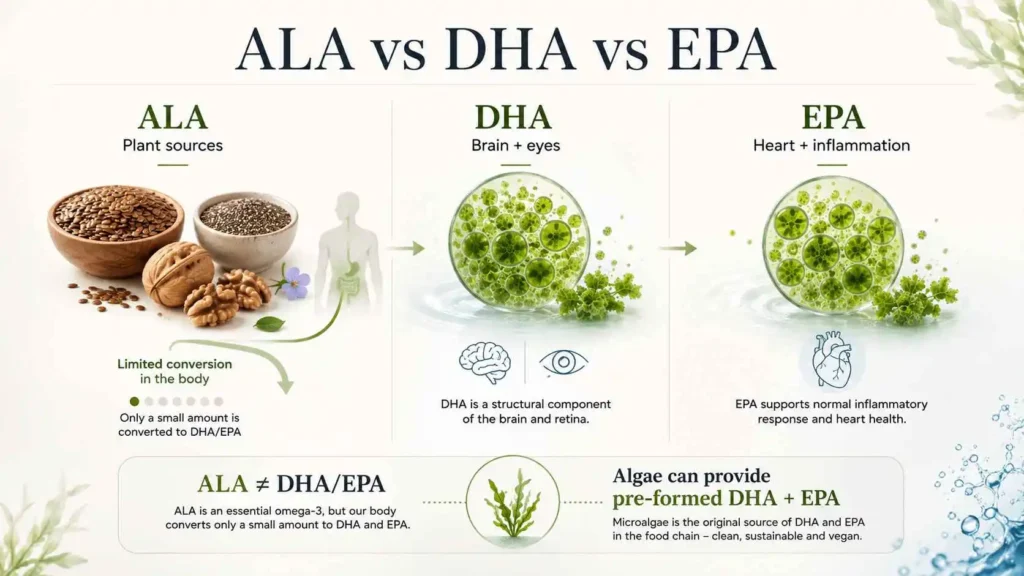
ALA is the plant-based omega-3 found in flaxseed, chia seeds, walnuts, and hemp seeds. It’s the starting material the body theoretically converts into DHA and EPA. NIH specifically explains that ALA conversion to EPA/DHA is very limited.
DHA (docosahexaenoic acid) is critical for brain structure, retina function, and nervous system development — it’s the dominant omega-3 in brain tissue.
EPA (eicosapentaenoic acid) is more associated with reducing inflammation, supporting heart health, and aiding recovery from exercise-induced inflammation.
The body converts only a small fraction of dietary ALA into usable DHA and EPA, and that conversion rate drops further on a nutritionally imbalanced diet. This is the core reason ALA vs DHA vegan debates keep coming up — flaxseed oil alone simply can’t replace a direct DHA/EPA source for anyone with elevated needs.
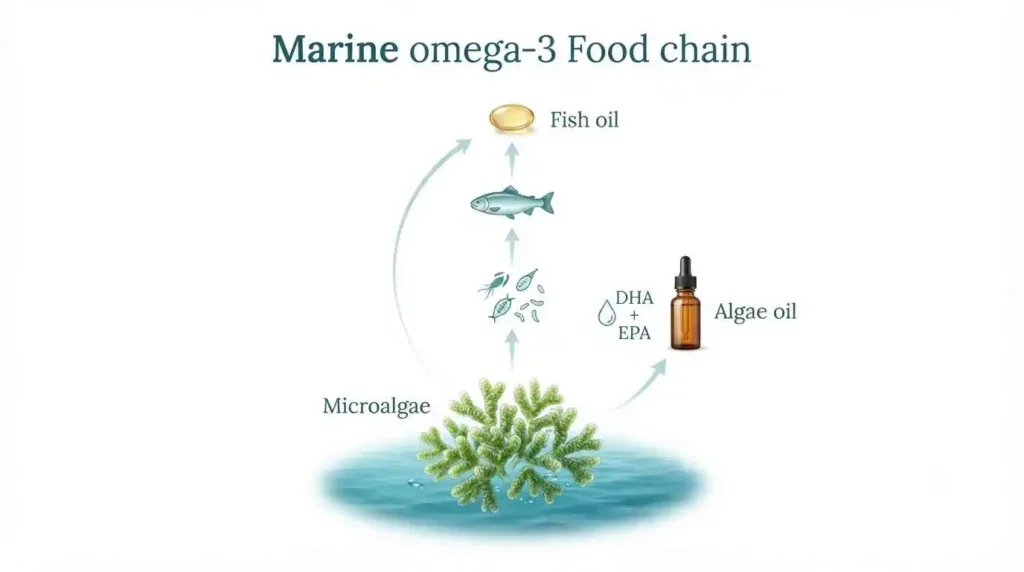
Algae are a direct source of DHA and, depending on the species, EPA in the marine food chain. Fish obtain these long-chain omega-3s through their diet, including consumption of algae and organisms that consume algae. Algae-based supplements provide a way to obtain DHA and EPA without using fish oil.
For people following a vegan diet, algae-based omega-3 supplements can provide a direct source of DHA and EPA without relying on fish-derived oils.
An India-manufactured softgel providing 500mg of DHA per two-capsule serving, sourced from microalgae.
Here’s a UK-made capsule that packs a punch with 500mg of DHA and 300mg of EPA in just two capsules, along with 35mg of DPA and vitamin D3, all sourced from the Opti3 microalgal complex at
Pros: It’s approved by the Vegan Society, rigorously batch-tested with results you can actually see, and safe for anyone aged 24 months and up.
Cons: Just a heads up, the import costs and shipping to India can really add up.
Best for: Families looking for a single product that’s safe for all ages.
Verdict: This one stands out with one of the best DHA/EPA ratios available, and it’s supported by real batch results instead of just marketing claims.
Delivers a 2:1 EPA-to-DHA ratio — 800mg EPA and 400mg DHA per two-capsule serving, plus 100mg of other omega-3s.
A 1:1 formula with 500mg EPA and 500mg DHA per two-capsule serving.
The highest-dose option here, delivering 1.6g of total omega-3s per serving — about 60mg more EPA and 180mg more DHA than Doctor’s Best.
A one-a-day softgel with 460mg total omega-3s: 250mg DHA, 125mg EPA, and 25mg DPA, from fermented microalgae.
Provides 390mg DHA and 195mg EPA across a two-softgel serving, for 715mg total omega-3.
Delivers 300mg DHA and 150mg EPA (550mg total) per serving, grown and bottled in the USA in a GMP-certified, FDA-registered facility
The budget pick, delivering 660mg total omega-3 (including DPA) across a three-capsule serving of notably small softgels.
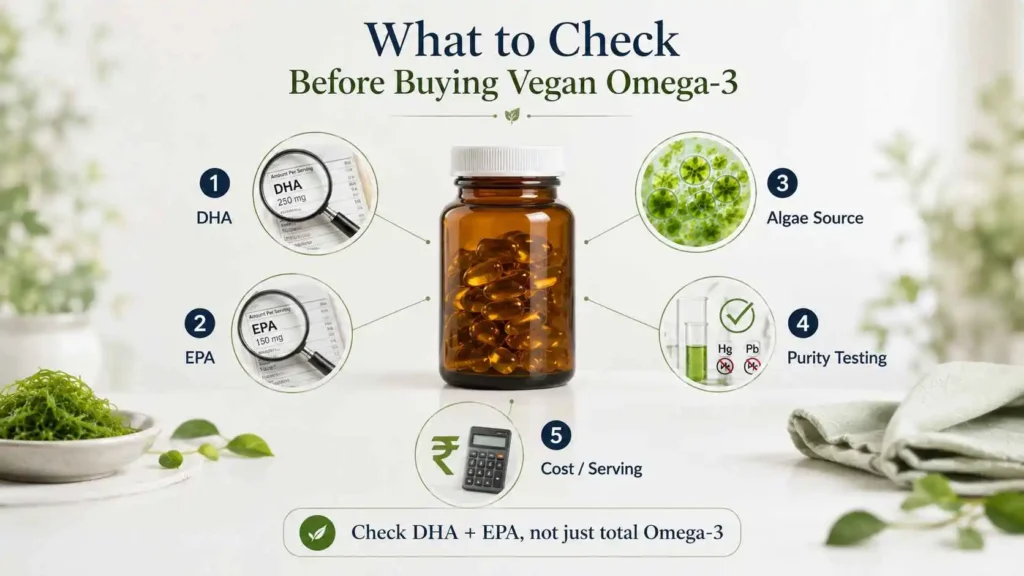
Look at the DHA milligram figure specifically, not just “total omega-3.” A 1000mg label with only 100mg DHA is a weak product.
If inflammation, joints, or heart health are your priority, favor products with a higher EPA ratio, like Doctor’s Best.
Algal oil delivers direct DHA/EPA; flaxseed and chia oils deliver ALA only, which converts poorly.
Look for brands that provide transparent third-party or batch testing for contaminants such as heavy metals and oxidation. Published testing can give buyers more information about product quality and purity.
Check the supplement facts and ingredient list, including the capsule shell, oils, antioxidants, colors, and other additives. If you have specific dietary preferences or sensitivities, choose a product with clearly disclosed ingredients.
Smaller capsules (like Micro Ingredients’) are easier to swallow but often require multiple capsules per serving.
Look for recognized certifications such as Certified B Corporation or Vegan Society certification when ethical sourcing, business practices, or vegan certification matter to you.
Omega-3 oils can be susceptible to oxidation, so follow the storage instructions on the product label and keep the bottle away from excessive heat and direct light. Check the ingredient list for antioxidants such as tocopherols when comparing formulations.
Price Range | What You Typically Get | Who It’s Best For |
Under ₹700 | Entry-level DHA-only formulas, India-manufactured, basic purity testing | First-time buyers, budget-conscious users |
₹700–₹1,200 | Balanced DHA + EPA formulas, imported or higher-testing standards | Most adults seeking a well-rounded dose |
₹1,200+ | Premium algal oils, higher total dose, sport or clinical certifications | Athletes, higher EPA/DHA needs, inflammation management |
Note: several brands in this guide (Vegetology, BrainMD, Momentous) are priced in USD and imported; actual landed cost in India will vary with shipping and currency conversion, so check the current listing before buying.
Cost per serving is the number that actually matters — a cheaper bottle with a smaller serving size can end up costing more per month than a pricier bottle with a bigger effective dose.
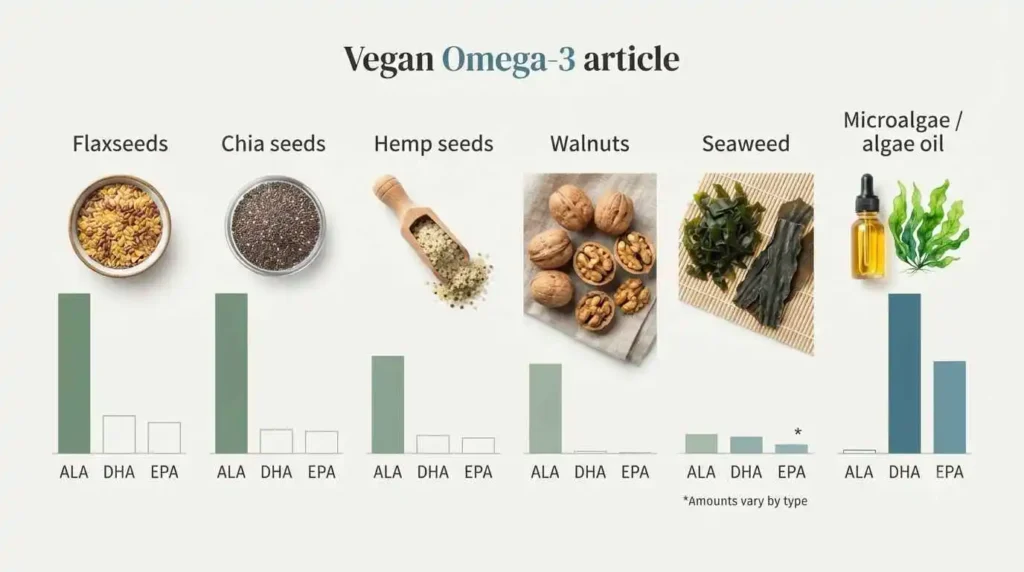
Food/Source | ALA | DHA | EPA |
Flaxseed | High | None | None |
Chia seeds | High | None | None |
Hemp seeds | Moderate | None | None |
Walnuts | Moderate | None | None |
Seaweed | Low | None | Small amounts |
Algae oil | None | High | High |
Whole foods like flaxseed and walnuts are excellent for ALA and come packed with fiber, minerals, and antioxidants, and are considered safe with no established upper intake limit from natural sources. But since almost no plant food delivers meaningful DHA or EPA directly, food alone is rarely sufficient for anyone with elevated omega-3 needs — pregnancy, cardiovascular risk, or cognitive support goals are all situations where an algae-based supplement becomes the practical choice.

Omega-3s are fat-soluble, so taking capsules alongside a meal containing some fat improves absorption.
Either morning or evening works, as long as it’s consistent — pairing the dose with your main meal is the simplest habit to sustain.
Dosing varies by brand and goal, ranging from a single one-a-day softgel (New Chapter) to two capsules delivering over 1g combined DHA/EPA (Doctor’s Best, Momentous). Follow the label dose and consult a doctor if you have a specific medical target.
Keep bottles sealed, away from direct sunlight and heat, and check for a listed expiry — oxidized omega-3 oils lose potency and can develop an off smell.
There’s no single “best for everyone” — the right pick depends on whether your priority is brain health (DHA-heavy), inflammation and heart health (EPA-heavy), or simply the most affordable way to close the gap that a plant-based diet leaves behind.
Omega-3 itself isn't inherently animal-derived — ALA comes from plants, and DHA/EPA can be sourced directly from microalgae rather than fish, making fully vegan omega-3 supplements widely available.
Yes, for ALA, through flaxseed, chia, walnuts, and hemp seeds — but direct DHA and EPA from whole plant foods are essentially absent, which is why supplementation is often recommended.
Algal oil, since it's the same original source fish get their DHA and EPA from, delivered without the ocean-borne contaminants.
Algal oil delivers the same active DHA and EPA as fish oil, with lower contamination risk and no fishy aftertaste, since it skips the fish middleman entirely.
This varies by age, sex, and health goals; a reasonable general target most supplements in this guide aim for is 250–500mg of combined DHA/EPA daily, in line with EFSA guidance cited in supplement reviews.
Not strictly mandatory for everyone, but since plant diets are ALA-rich and DHA/EPA-poor, supplementation is a practical way to close that gap rather than relying on inefficient ALA conversion.
Algal-oil capsules deliver the same DHA and EPA molecules found in fish oil, since fish themselves source these compounds from algae — the difference is purity and sustainability, not the fatty acid itself.
Some formulas, like Vegetology's, are labeled suitable for pregnant women and children from 24 months, though dosing needs vary by age and health status. Always confirm dosage with a doctor or pediatrician before starting supplementation for children or during pregnancy.
Your choices can help protect innocent lives.
No spam. Only vegan tips, cruelty-free updates & animal awareness 🐾


 Vegan FoodBaby & MomBeautyFashionPet & Animal CareHealth & WellnessHome & Cleaning Essentials
No account yet?
Create an Account