Blogs

Vegan Fish vs Real Fish: The Ultimate Nutrition, Protein & Omega-3 Comparison (2026 Guide)

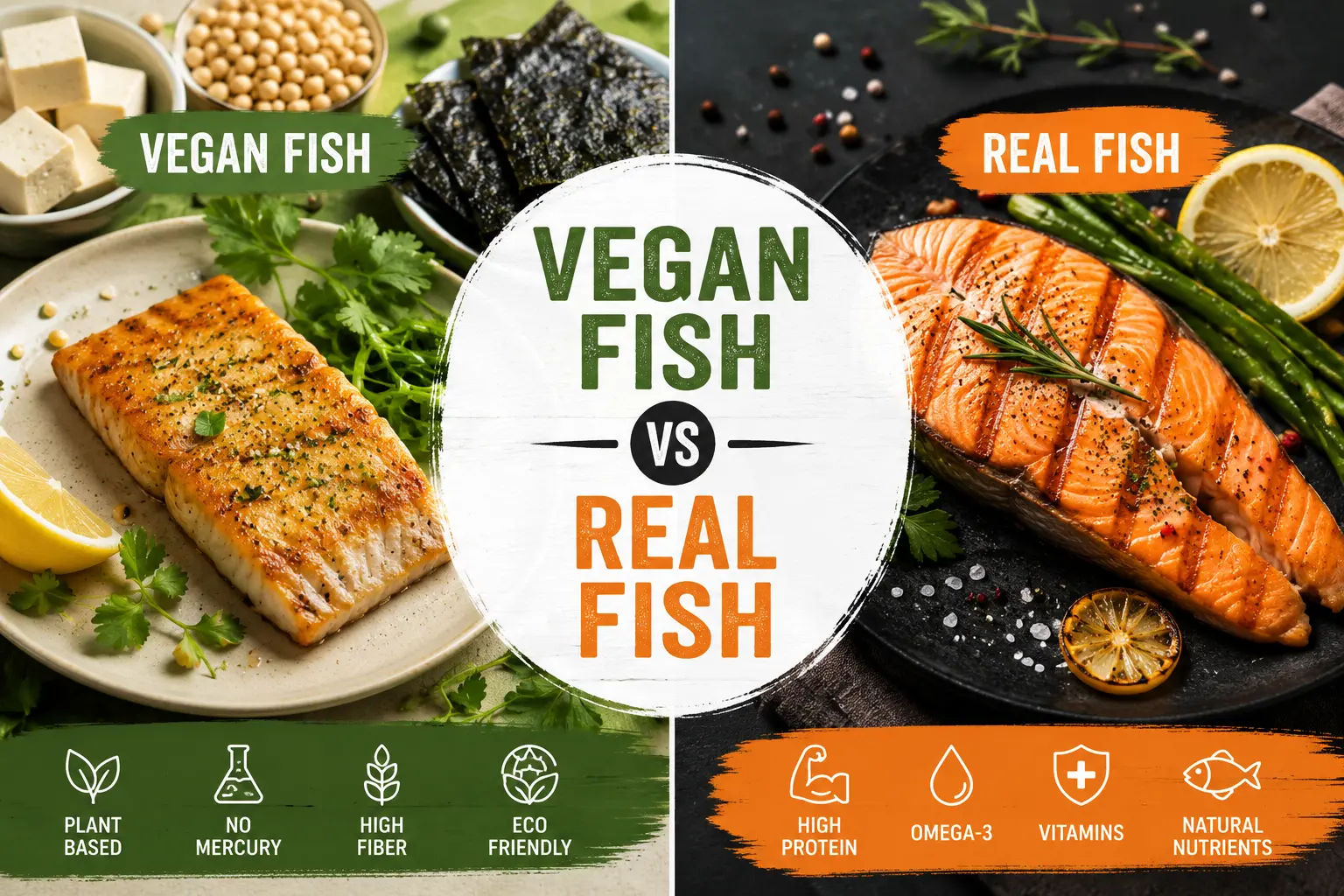
Vegan fish vs real fish showdown

The ocean used to be the only place we looked for fish. Today, that’s changed. Whether you’re vegan, flexitarian, or simply curious about what’s on your plate, the question of vegan fish vs real fish nutrition has become one of the most searched food comparisons of 2026. And for good reason — the stakes are personal, planetary, and nutritional all at once.

This guide cuts through the noise with real data, honest comparisons, and a clear verdict. No fluff. Just facts.

Vegan Fish vs Real Fish (Quick Comparison)

Key Differences at a Glance

Before we dive deep, here’s a quick snapshot of how these two protein sources stack up across the most important factors:

Factor

Vegan Fish

Real Fish

Protein (per 100g)

~10–22g (varies by product)

~18–26g

Calories (per 100g)

~100–170 kcal

~96–130 kcal

Omega-3 (EPA+DHA)

Low (unless algae-fortified)

High (esp. in oily fish)

Cholesterol

Zero

Present

Fibre

~3.57g avg

Zero

Mercury Risk

None

Present in some species

Saturated Fat

Low (<1.5g/100g avg)

Low to moderate

Vitamin B12

Rarely fortified

Naturally rich

Vitamin D

Rarely present

Naturally present

Environmental Impact

Lower

Higher

Cost

Higher

Lower to moderate

Which One is Healthier Overall?

The short answer: it depends on what you’re optimizing for. Real fish wins on natural protein density, omega-3 bioavailability, and micronutrient richness. Vegan fish wins on zero cholesterol, no mercury risk, higher fibre, and environmental impact. Neither is a clear universal winner — your lifestyle, health goals, and values determine the right choice.

What is Vegan Fish and Real Fish? (Basic Overview)

What is Vegan Fish Made Of

Vegan fish is a plant-based alternative designed to replicate the taste and texture of traditional fish. It is typically crafted from ingredients like soy protein, wheat gluten, jackfruit, or konjac, and may also include seaweed or algae for a briny, ocean-like flavor. You’ll find it used in dishes like vegan sushi, fish tacos, and grilled fillets. Some newer products also use mycoprotein and microalgae as base ingredients. GonnaNeedMilk

The seaweed and nori element is particularly clever. When tofu-based vegan fish is marinated with nori sheets — the same seaweed used in sushi — it absorbs a natural oceanic flavor that genuinely mimics the taste of real fish.

If you’re curious to explore vegan fish options available in India, VegGora’s complete guide to vegan fish covers the best options available right now.

What is Real Fish (Nutritional Basics)

Real fish is an animal-based protein sourced from oceans, rivers, and farmed aquaculture systems. It is naturally rich in complete protein, omega-3 fatty acids, vitamin D, vitamin B12, selenium, and iodine. The nutritional value varies significantly by species — oily fish like salmon and sardines are much richer in omega-3 than white fish like tilapia or cod.

Tilapia, for example, is one of the lowest calorie freshwater fish at just 96 calories per 100g, providing 20g of protein per 100g and being a fine source of essential fatty acids, protein, minerals, and fat-soluble vitamins E and D. Veganomega3supplements

Vegan Fish vs Real Fish Nutrition Comparison

Protein Content (Vegan Fish vs Real Fish Protein)

This is where the gap is most noticeable. A typical cooked fish product contains 18–20g of protein per 100g, whereas the average for plant-based alternatives stands at 10g — almost half. That said, this number varies greatly across companies and countries, with some products offering over 22g of protein. MYOM Shop

The good news? Nearly 80% of vegan fish options meet the EU criterion for being labeled a “source of protein,” which requires at least 12% of energy to come from the macronutrient. MYOM Shop

For comparison, real fish like tuna provides up to 26g of protein per 100g, while tilapia delivers around 22–23g. These are complete proteins containing all essential amino acids — something vegan fish products can match when made from soy protein, which also carries a complete amino acid profile.

Calories Comparison (Vegan Fish Calories vs Real Fish)

Real fish tends to be slightly lower in calories for the same serving size. Salmon provides around 130 calories per serving, tilapia around 110 calories, and tuna around 130 calories per serving. NUTRABAY

Vegan fish varies more widely — typically ranging between 100–170 calories per 100g depending on the base ingredient and preparation. Processed vegan fish products (like battered vegan fish sticks) can be higher in calories due to coatings and added fats.

Fat Content and Cholesterol Differences

Both real fish and vegan fish are generally low in saturated fat. Most vegan fish products fall below the EU threshold of 1.5g of saturated fat per 100g. Real white fish like tilapia is also very lean, with only 2.7g of fat per 100g cooked. MYOM

The key difference? Unlike real fish, vegan fish contains no cholesterol and avoids concerns over mercury contamination. For anyone managing cardiovascular health, zero dietary cholesterol is a meaningful advantage. GonnaNeedMilk

Shopveggora

Vitamin and Mineral Comparison

Here, real fish holds a clear edge. Real fish is naturally rich in vitamin D, vitamin B12, selenium, iodine, and zinc — nutrients that are rarely found in vegan fish unless specifically fortified.

Fortification is a common strategy in the meat alternatives industry, but not as widespread for fish alternatives. When it comes to B12, only Spain has more than 50% of products fortified with it — the US, the UK, South Africa, and Czechia were found completely lacking in B12 fortification for vegan seafood. MYOM Shop

However, the one area where vegan fish shines over real fish is fibre — conventional fish contains zero fibre unless breaded, while vegan alternatives contain an average of 3.57g of fibre per 100g. MYOM Shop

Detailed Nutrition Comparison Table (per 100g)

Nutrient

Vegan Fish (avg)

Salmon

Tilapia

Tuna

Calories

100–170 kcal

130 kcal

96–110 kcal

130 kcal

Protein

10–22g

22g

20–23g

26g

Fat

3–8g

5–7g

2.7g

1–3g

Saturated Fat

<1.5g

~1.5g

~0.9g

~0.3g

Cholesterol

0mg

~55mg

~50mg

~45mg

Fibre

~3.57g

0g

0g

0g

Omega-3 (EPA+DHA)

Low–moderate

High

Low–moderate

Moderate–high

Vitamin B12

Rarely fortified

High

High

High

Vitamin D

Rarely present

Present

Present

Moderate

Mercury

None

Low

Very low

Moderate–high

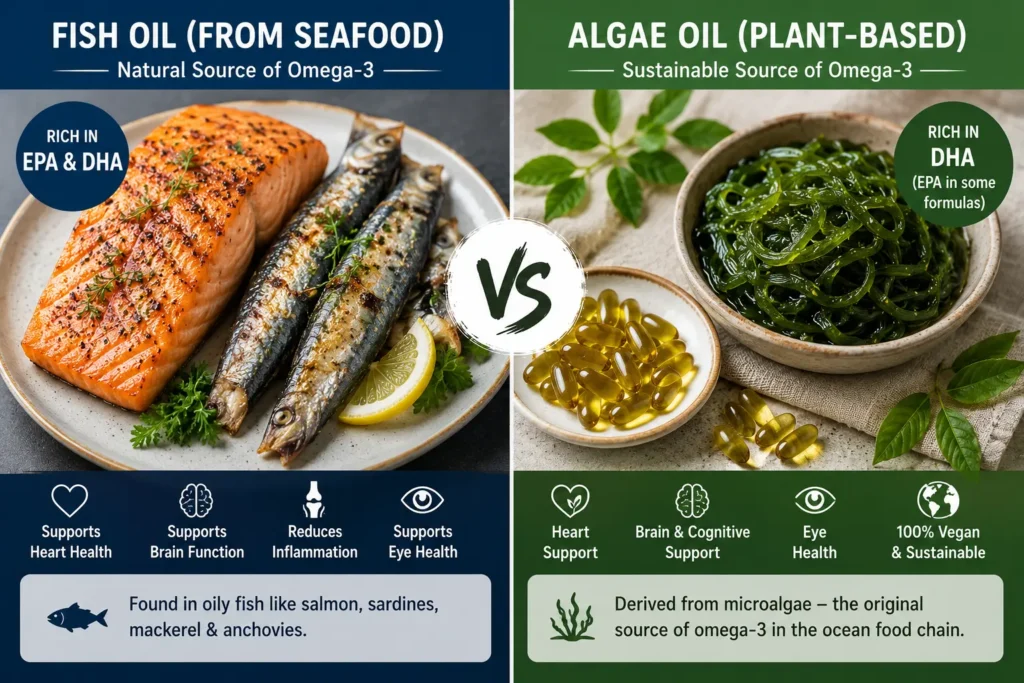
Omega-3 Comparison (Vegan vs Fish Oil)

vegan fish
Most vegan fish products are made from plant proteins, seaweed, algae, and natural flavouring ingredients.

Omega-3 in Real Fish (EPA & DHA)

Real fish — particularly oily varieties — is the gold standard for EPA and DHA omega-3 fatty acids. Seafood varieties higher in EPA and DHA and lower in methylmercury include salmon, anchovies, sardines, Pacific oysters, trout, shrimp, crab, and flounder. Wellbeing Nutrition

Federal nutrition guidelines recommend consuming an average of 250 milligrams daily of DHA and EPA. One to two servings of a high-omega-3 species like salmon, sardines, or Pacific or Atlantic mackerel can meet the weekly recommendation for omega-3s.

Omega-3 in Vegan Fish (Algae-Based Sources)

Plant-based sources primarily provide ALA (alpha-linolenic acid), not EPA and DHA directly. While plant sources provide ALA, which the body can convert into EPA and DHA, the conversion rates are relatively low. Green Queen

However, algae-based omega-3 supplements change this equation significantly. Only 27% of vegan fish products listed omega-3 content on their packaging, at an average of 0.75g per 100g — on par with seafood. This suggests that well-fortified vegan fish products can genuinely compete with real fish on omega-3 delivery. MYOM Shop

Vegan Omega-3 vs Fish Oil – Which is Better?

One study published in the Journal of the American College of Nutrition found that participants who took an algae-based omega-3 supplement experienced significant improvements in their cholesterol levels, while another study published in the British Journal of Nutrition found that vegan omega-3 supplements were just as effective as fish oil at reducing inflammation in the body. Future Market Insights

Perhaps most surprisingly, women following vegan diets actually had significantly more long-chain omega-3 fats in their blood compared with fish eaters, meat eaters, and ovo-lacto-vegetarians, according to findings from the European Prospective Investigation into Cancer and Nutrition (EPIC) Study. Indus Foods

What algae supplements do replicate is the EPA and DHA delivery of a fish oil capsule. In assessment, algae cultivation has a meaningfully smaller environmental footprint than industrial fishing for fish oil. Data Insights Market

Is Vegan Fish Healthier Than Real Fish?

Health Benefits of Vegan Fish

  • Zero cholesterol — beneficial for heart health management
  • No mercury or PCB contamination risk
  • Contains dietary fibre (approximately 3.57g per 100g on average)
  • Suitable for all dietary restrictions including vegan, vegetarian, and allergen-sensitive diets
  • Rich in protein and often fortified with essential nutrients like omega-3 from algae, providing heart-healthy benefits GonnaNeedMilk

Health Benefits of Real Fish

  • Complete protein with all essential amino acids
  • Naturally rich in EPA and DHA omega-3s
  • High in vitamin D, B12, selenium, and iodine
  • Studies have shown that eating seafood can decrease the risk of heart attack, stroke, obesity, and hypertension Veganomega3supplements
  • Highly bioavailable micronutrients

Which is Better for Heart Health?

This one is genuinely nuanced. A plant-based diet has been proven to prevent and even reverse heart disease. One study found that while replacing red meat with plant-based protein lowers the risk for heart disease, replacing red meat with fish did not reduce the risk. In another study comparing a Mediterranean diet high in fish and omega-3 fats to a vegan diet, the low-fat vegan diet had a larger improvement in body weight and cholesterol. Indus Foods

That said, the omega-3s in real oily fish genuinely support cardiovascular health when consumed in moderation. The key is frequency — EWG recommends restricting seafood consumption to two or three meals per week, beyond which the beneficial effects of omega-3s subside and the risks posed by contaminants add up.

Vegan Fish Benefits vs Real Fish Benefits

Environmental Benefits

In 2024, it is estimated that over 37% of fish stocks monitored by the FAO were overfished. The number of overfished stocks globally has tripled in half a century. SnapCalorie

Fully one-third of the world’s assessed fisheries are currently pushed beyond their biological limits, according to the Food and Agriculture Organization of the United Nations. My Food Data

According to the 2019 Global Assessment Report on Biodiversity and Ecosystem Services, overfishing is a primary driver of mass extinction in the world’s oceans. A 2021 study published in Nature asserted that the “primary cause” of ocean defaunation is overfishing. Green Queen

Choosing vegan fish directly reduces demand pressure on these collapsing fish populations.

Ethical Advantages

Vegan fish involves no animal suffering, bycatch, or disruption of marine ecosystems. Commercial fishing kills billions of non-target animals annually as bycatch — a consequence that plant-based seafood eliminates entirely.

Sustainability Comparison

Plant sources like flaxseeds, chia seeds, and hemp seeds are eco-friendly. These crops require fewer environmental resources and do not involve harming marine ecosystems. Algal oil, derived from algae, provides a direct source of DHA without impacting marine life. Green Queen

Vegan Fish Disadvantages vs Real Fish

Limitations of Vegan Fish (Processing, Nutrients)

  • Lower average protein density than real fish
  • Rarely fortified with B12, vitamin D, or iodine
  • Often higher in sodium — on average, plant-based seafood contains 1.2g of salt per 100g, above both EU and US thresholds MYOM Shop
  • More processed than whole real fish
  • Higher cost at retail

Risks of Real Fish (Mercury, Contaminants)

A common concern with fish oil and real fish consumption is mercury and other ocean pollutants, such as PCBs (polychlorinated biphenyls). In higher doses, fish oil can have a blood-thinning effect, so people on blood-thinning medications should consult a healthcare provider first. GFI India

Tuna in sushi had three to ten times more mercury than eel, crab, salmon, and kelp rolls. Tuna served at upscale sushi restaurants and prepared as sashimi and nigiri had the highest mercury concentrations of all.

Which Has More Downsides?

For healthy adults without specific dietary restrictions, real fish has fewer nutritional downsides when consumed in moderation and from low-mercury species. For pregnant women, people managing cholesterol, or those following an ethical lifestyle, vegan fish has fewer downsides overall.

Vegan Seafood vs Seafood (Detailed Comparison)

Taste and Texture Comparison

Real fish has a naturally flaky, moist texture and a briny, oceanic flavour that is difficult to fully replicate. Vegan fish has improved dramatically — tofu-based products marinated in nori achieve a surprisingly convincing ocean flavour, while konjac-based versions mimic the texture of white fish quite closely.

The honest truth? A side-by-side blind taste test would still reveal the difference to most people. But for cooking purposes — curries, tacos, sandwiches — well-made vegan fish is genuinely satisfying.

Cooking and Usage Differences

Both can be baked, pan-fried, air-fried, or grilled. Real fish is more forgiving in terms of moisture — it naturally stays juicy. Vegan fish, especially tofu-based varieties, benefits from longer marination time to absorb flavour fully. In terms of versatility in Indian cooking — curries, chaats, wraps — vegan fish works exceptionally well.

Availability and Cost Comparison

Real fish is widely available across India at every price point. Vegan fish remains a premium, urban product — more commonly found on e-commerce platforms and specialty stores. To enhance the overall nutritional credentials of seafood analogues and increase their uptake by consumers, flavour should be central to product development, with umami-rich ingredients like seaweed, soy sauce, and mushrooms lending the broth-like savoury notes seafood lovers find appealing. MYOM Shop

Which is Better: Vegan Fish or Real Fish?
Best Choice for Health

Real fish wins on natural micronutrient density, bioavailable omega-3 (EPA+DHA), and complete protein — particularly oily fish like salmon and sardines consumed 2–3 times per week. Choose low-mercury species and buy from sustainable sources.

Vegan fish wins for people managing cholesterol, those at risk from contaminants, and anyone wanting zero mercury exposure.

Best Choice for Environment

Vegan fish wins clearly. With over a third of global fish stocks already overfished and marine vertebrate populations having declined significantly over recent decades, plant-based seafood reduces direct ecological pressure on ocean ecosystems.

Best Choice for Lifestyle (Vegan, Flexitarian)

Vegan fish wins for vegans, vegetarians, and flexitarians looking to reduce animal consumption without sacrificing a seafood-style eating experience.

Who Should Choose Vegan Fish vs Real Fish?

For Vegans and Vegetarians

Vegan fish is the only option here — and a good one. Look for products fortified with algae-based omega-3, vitamin B12, and vitamin D to compensate for the micronutrients found naturally in real fish. You can also explore vegan prawns as an exciting plant-based seafood alternative.

For Fitness and Protein Needs

Real fish — particularly tuna, salmon, and tilapia — is more protein-dense per calorie. For athletes or those with high protein targets, real fish is the more efficient choice. However, high-protein vegan fish products (22g+ per 100g) from soy protein isolate are increasingly competitive. If you’re building a high-protein plant-based diet overall, our guide on high-protein vegan foods has more to explore.

For People with Allergies

Fish allergy is one of the most common food allergies globally. New fish allergies can develop in adults, with the most common problems being with salmon, tuna, and halibut. If you are allergic to one kind of finned fish, you may be allergic to others. For these individuals, vegan fish is not just a preference — it’s a necessity. Note that some vegan fish products contain soy or wheat gluten, which may trigger separate allergies. veggora

Conclusion

Final Verdict on Vegan Fish vs Real Fish

Both have real strengths. Real fish delivers superior natural protein, EPA/DHA omega-3 bioavailability, and a richer micronutrient profile — particularly for vitamin D, B12, and selenium. Vegan fish delivers zero cholesterol, no mercury risk, meaningful fibre content, and a significantly lower environmental footprint. The protein gap between the two is narrowing as vegan fish technology improves.

Which One Should You Choose?

Choose real fish if you are an omnivore focused on maximum nutritional density, eat fish 2–3 times per week, and choose low-mercury species from sustainable sources.

Choose vegan fish if you are vegan or vegetarian, managing cholesterol, concerned about mercury, or motivated by sustainability and animal welfare. Prioritize products fortified with algae-based omega-3, B12, and vitamin D to fill the micronutrient gaps.

The future of food is plant-forward — and vegan fish is a meaningful part of that shift. Explore VegGora’s vegan food collection to find plant-based options that align with your lifestyle and values. 

Leave a Reply

Your email address will not be published. Required fields are marked *