


-49% Hot
Price range: ₹359.00 through ₹699.00

-43% Hot

Original price was: ₹699.00.₹399.00Current price is: ₹399.00.
-44% New

Price range: ₹249.00 through ₹449.00
-53% Hot
Price range: ₹300.00 through ₹470.00
 Vegan Food
 Baby & Mom
 Beauty
 Fashion
 Pet & Animal Care
 Health & Wellness
 Home & Cleaning Essentials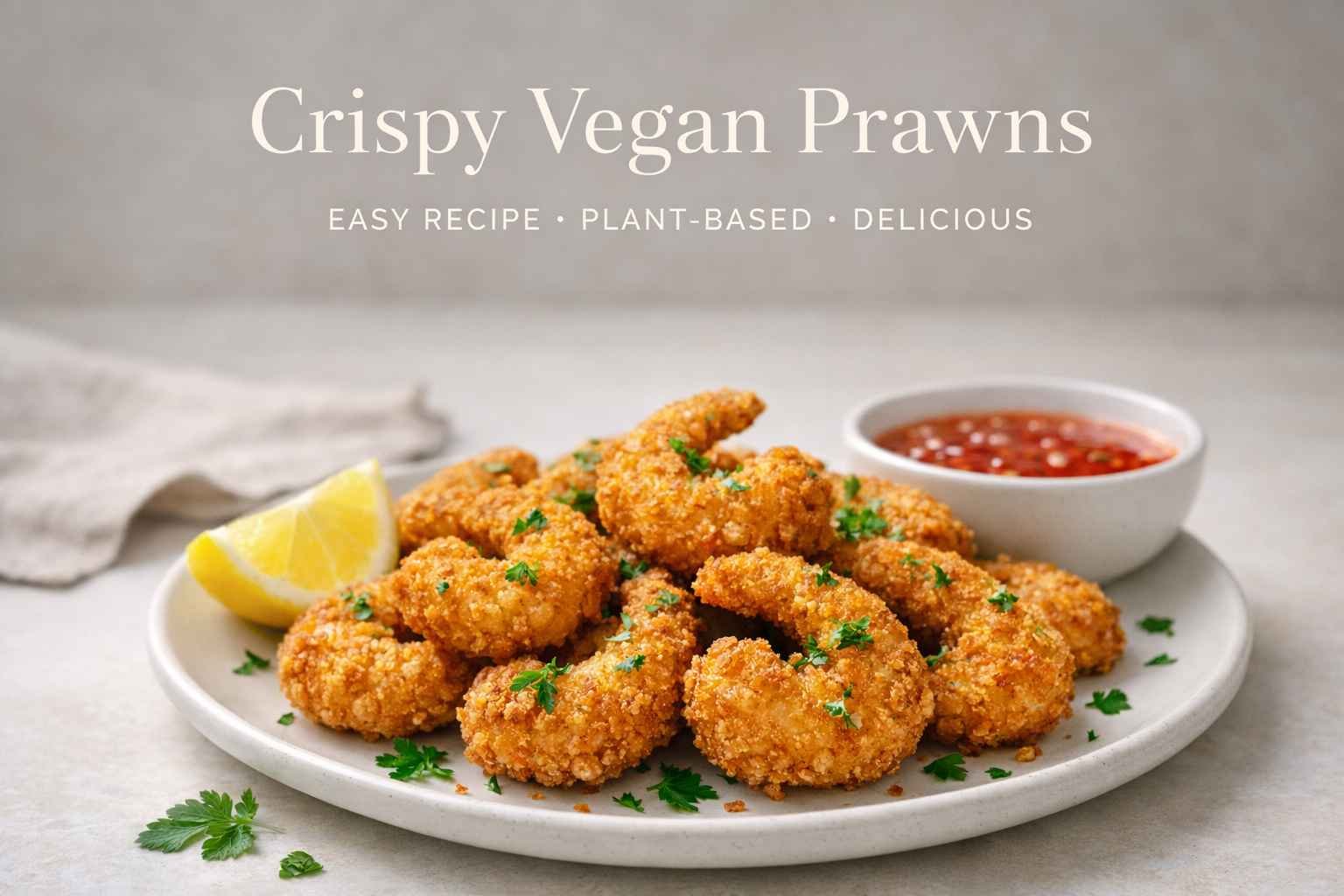
Whether you’re fully plant-based, cutting back on seafood, or just curious about what’s happening in the world of alternative proteins, vegan prawns are having a serious moment. And honestly? It’s well deserved.
Over the past few years, plant-based seafood has moved from niche health food stores to mainstream supermarket freezers. The market for vegan seafood alternatives is projected to reach $1.3 billion by 2031, according to industry analysts. That’s not a niche trend — that’s a food revolution quietly happening in your local frozen aisle.
In this guide, we’re covering everything you need to know about vegan prawns: what they are, what they’re made from, the best brands you can buy right now, how to make them at home, and a full crispy vegan prawn recipe you’ll want to make on repeat.
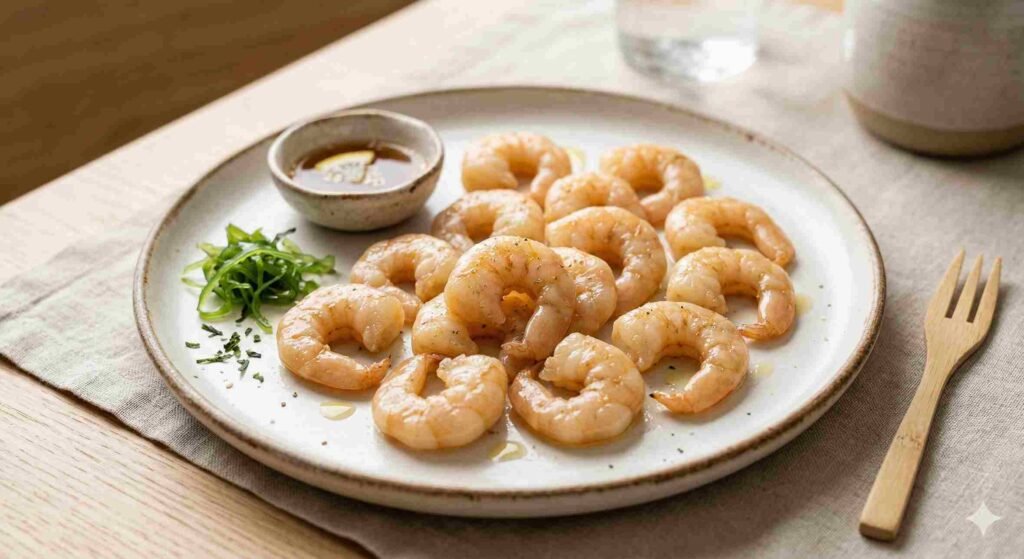
Vegan prawns — also called plant-based prawns or vegan shrimp — are seafood alternatives made entirely from plant-based ingredients designed to mimic the taste, texture, and appearance of real prawns. They contain no shellfish, no animal products, and no by-products from the sea.
These products exist to satisfy the craving for that satisfying, slightly chewy, mildly sweet bite of a prawn — without any of the animal welfare or environmental concerns that come with conventional shellfish farming.
This is probably the first question anyone asks. The honest answer: it depends on the brand and the base ingredient used.
Real prawns have a firm yet tender bite, a subtle ocean sweetness, and a slightly springy texture. The best vegan prawns replicate this through ingredients like konjac root, which has a mildly fishy scent and a mouthfeel remarkably similar to shellfish meat. Brands using konjac, seaweed extract, and sodium alginate tend to get closest to that real-prawn experience.
Homemade versions using king oyster mushrooms or vegan sausages won’t fool a seasoned seafood lover, but they absolutely deliver something delicious and satisfying in their own right — especially when seasoned well and fried to a golden crisp.
This is worth unpacking carefully, because the answer isn’t black and white.
Plant-based seafood products can be a useful source of protein. According to research reviewed by Plant Based News, vegan seafood made from legumes and wheat protein can deliver between 12 and 21 grams of protein per serving, with no saturated fat or cholesterol — which is notable compared to real prawns, which contain significant cholesterol.
However, a 2024 analysis published in Trends in Food Science and Technology found that many seafood alternatives fall short on essential nutrients, particularly omega-3 fatty acids, iron, vitamin B12, and dietary fibre. The researchers recommended more widespread fortification of plant-based seafood products to bring them closer to nutritional parity with conventional options.
One area where vegan prawns genuinely win: they carry none of the food safety risks associated with farmed shellfish, such as antibiotic residue contamination — a concern flagged by the US Food and Drug Administration regarding imported farmed shrimp.
The bottom line is that vegan prawns can be a healthy addition to your diet, particularly if you’re eating them occasionally alongside a varied, whole-food plant-based diet. Always check the nutrition label — sodium content can be high in some processed products.
This is one of vegan prawns’ biggest real-world benefits. Shellfish allergy affects an estimated 1% to 3% of the general population worldwide, according to research published in Clinical Reviews in Allergy & Immunology (2025). It is one of the most severe and persistent food allergies, capable of triggering anaphylaxis, and unlike many childhood food allergies, it typically does not resolve with age.
For people with shellfish allergies, vegan prawns offer the social and culinary experience of eating “prawns” at a dinner party or restaurant without any risk of a reaction — provided the product itself is free from their other allergens.
That said, vegan prawns are not universally allergen-free. Many are made with soy, wheat, or gluten-containing ingredients. Some brands, such as BeLeaf’s Plant-Based Shrimp, are specifically formulated to be soy-free and gluten-free, making them a better option for people managing multiple food sensitivities. Always read labels carefully.
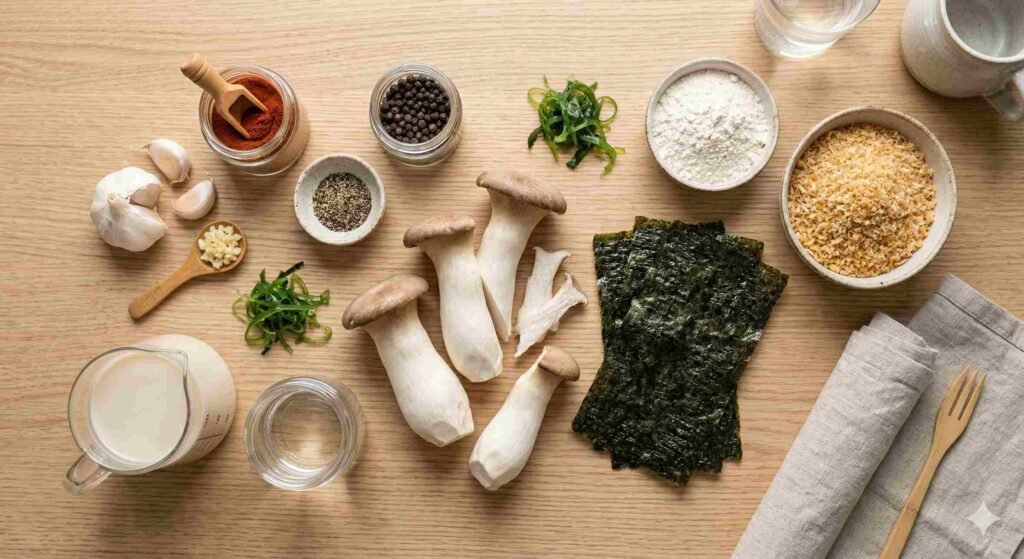
The base ingredient largely determines the texture, flavour, and overall success of a vegan prawn. Here are the most common options.
King oyster mushrooms are widely considered the gold standard for homemade vegan prawns. Their thick, dense stems can be sliced and shaped to mimic the curved, teardrop shape of a prawn. When breaded and fried, they develop a crisp exterior with a firm, meaty interior that holds its own in any dish.
The key to getting the shape right is slicing the mushroom stems into half-inch rounds and then cutting each round with a curved “S” cut — essentially mimicking the natural curl of a real prawn. It takes a minute to master, but the results are genuinely impressive.
Konjac is an Asian root vegetable whose starch has been used in East Asian cooking for centuries. It’s now one of the most popular base ingredients for commercial vegan seafood products. According to sources at Vegan Supermarket UK, konjac flour-based prawns have a chewy texture and a mild flavour that works particularly well in stir-fries and paella.
Seaweed — particularly nori — is frequently added to konjac-based products to impart that subtle “ocean” flavour that makes vegan prawns feel genuinely seafood-like. Brands like Good2Go Veggie combine konjac powder with nori for exactly this reason.
Many brands use soy protein as the primary structural ingredient, sometimes combined with wheat protein, pea fibre, or potato starch to achieve the right texture. Fry’s Family Foods, for example, makes Battered Prawn-Style Pieces using a soy protein blend flavoured with lemon zest and nori — a combination that delivers both texture and a convincing seafood flavour.
Soy is also prized in plant-based seafood for its omega-3 fatty acid content and its low cholesterol and saturated fat profile, as noted by Plant Based News in their review of vegan seafood nutrition.
If you don’t have mushrooms or konjac to hand, there are other creative options. Some home cooks use hearts of palm for their fibrous, slightly firm texture. Silken tofu, shaped and seasoned, can work in lightly sauced dishes where texture is less critical.
One particularly clever approach, popularised by UK food blogger School Night Vegan, is using pink-coloured vegan sausages — specifically varieties containing methyl cellulose, an ingredient that helps vegan meats firm up during cooking. Cut into prawn shapes, marinated in nori and spices, then coated in panko, they produce a surprisingly convincing result.
The UK plant-based seafood scene has expanded significantly in recent years, with several brands now stocking major supermarkets.
Vegan Zeastar is one of the standout names. Available through Vegetarian Express and independent retailers across Europe, their vegan shrimp range includes plain, Crispy Chilli, and Crispy Lemon varieties. Their products use a combination of potato starch and kelp extract for texture and flavour, with non-GMO soy protein for protein content. They have been described in food press as offering a “mind-bogglingly realistic” plant-based seafood experience.
Fry’s Family Foods offers Battered Prawn-Style Pieces made from soy and wheat protein, lemon zest, and nori — and they landed in Iceland stores, giving them impressive mainstream UK reach.
Sophie’s Kitchen (now operating under Future Farm branding) offers vegan prawn and smoked salmon products that have been noted by Veganuary as good picks for anyone transitioning to a plant-based diet.
In the US, the market for plant-based shrimp is more developed, with several specialist brands leading the way.
The Plant Based Seafood Co. (Mind Blown) was founded by former seafood industry professionals who wanted to offer a cruelty-free alternative. They offer two shrimp SKUs: Crispy Crunchy Breaded Shrimp and Plant-Based Dusted Shrimp.
BeLeaf makes a plant-based shrimp with just seven ingredients, including konjac powder, cassava starch, and seaweed seasoning. It is notable for being nut-free, soy-free, and gluten-free — making it one of the most allergy-friendly options on the market.
All Vegetarian Inc., a family business founded in 1993 and based in Northern California, makes vegan shrimp from pea and seaweed extract. Their decades of experience show in the product — it remains one of their best-selling lines.
Good2Go Veggie (Shock’n Shrimp) has a compelling origin story: one of its co-founders actually owns a seafood restaurant. The product is made with konjac powder and nori and has received positive attention for tasting close to the real thing.
In the UK, look for vegan prawns at Iceland, Sainsbury’s, and Morrisons, as well as online at Vegan Supermarket and directly from brand websites. Vegan Zeastar products are available through Vegetarian Express for foodservice, or through independent vegan retailers.
In the US, brands like BeLeaf and All Vegetarian are available on Amazon and through brand websites. Mind Blown products can be found at various health food retailers and online.
The choice of brand matters more than people realise. For dishes where texture is central — like a prawn cocktail, tempura, or stir-fry — go for a konjac-based product with minimal coating, so the texture is the star. For party bites and finger food, breaded and pre-seasoned varieties like Vegan Zeastar’s Crispy Chilli Shrimpz work brilliantly because all the flavour is built in. For allergen-sensitive households, BeLeaf’s soy-free, gluten-free formula is the safest bet.
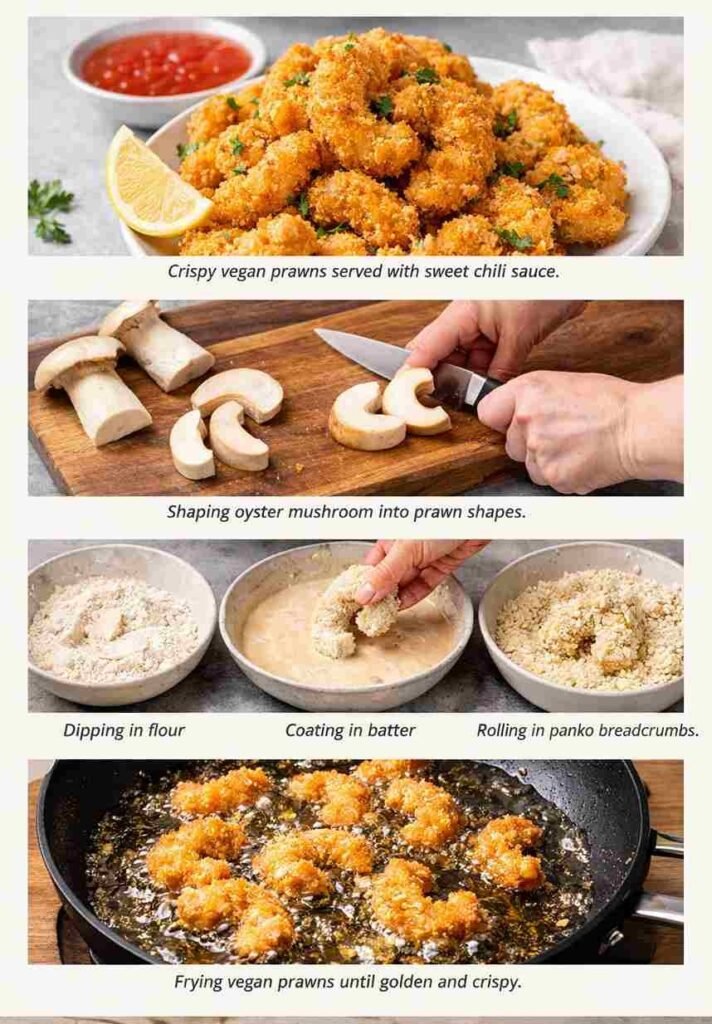
To make king oyster mushroom-based vegan prawns, you’ll need: king oyster mushrooms (the stems specifically), plain flour, a plant-based milk or aquafaba for the batter, panko breadcrumbs, and a spice blend. For the seasoning, the essentials are salt, black pepper, garlic powder, smoked paprika, and a small amount of nori powder or crumbled nori sheets to bring in that ocean flavour.
Slice the king oyster mushroom into half-inch rounds. Then, on each round, make a curving “S” or yin-yang style cut to produce two crescent-shaped pieces that visually resemble prawns. Pat them dry with kitchen paper — moisture is the enemy of a crispy coating.
Set up a three-stage breading station: seasoned flour first, then your wet batter (a simple mix of flour, plant milk, and spices whisked to a smooth consistency), then panko breadcrumbs mixed with a pinch of crushed dried chilli. Dip each mushroom piece into the flour, then the batter, then the panko, pressing gently to ensure an even coating. Let them rest at room temperature for 10–15 minutes before cooking — this helps the coating adhere.
All four methods work. For the crispiest result, deep frying in sunflower oil at 160–180°C is the most reliable — cook until golden, usually 2–3 minutes. Air frying at 190°C for 10–12 minutes gives a slightly lighter result with less oil. Shallow pan frying works well for small batches. Oven baking is the lowest effort: 200°C for 15–18 minutes, flipping halfway.
Don’t overcrowd the pan or air fryer basket — space allows steam to escape and keeps the coating crisp. Make sure the oil is at temperature before adding the prawns; too cool and they’ll absorb oil rather than crisp up. Drain cooked pieces on kitchen paper immediately after cooking.
(Serves 2–3 as a starter)
Serve immediately, garnished with fresh parsley.
These go brilliantly as a starter with sweet chilli sauce or a homemade vegan cocktail sauce. They also work wonderfully in a wrap with shredded lettuce, sliced avocado, and a drizzle of sriracha mayo. For a more substantial meal, serve them over jasmine rice with a light soy and ginger dressing on the side.
Cooked vegan crispy prawns are best eaten fresh while the coating is still crispy. If you have leftovers, store them in an airtight container in the refrigerator for up to 2 days and reheat in an air fryer or oven — avoid the microwave, which will make the coating soggy.
If you’re using store-bought vegan prawns, many brands are freezer-friendly and can be cooked directly from frozen — check the packaging instructions. Homemade mushroom-based vegan prawns are best cooked fresh and not frozen after frying.
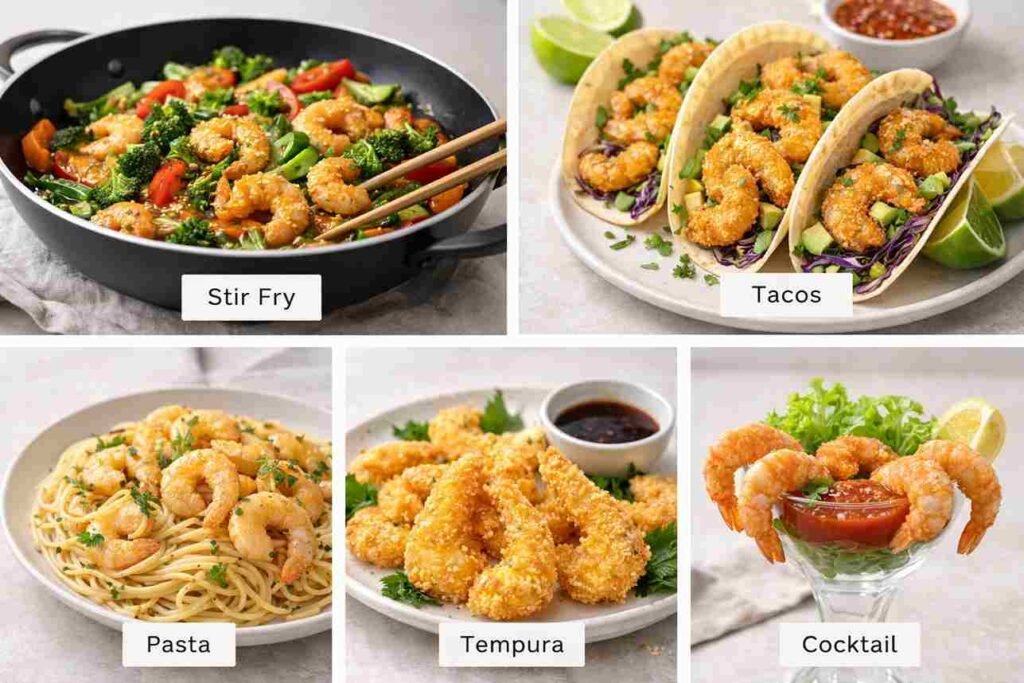
This is arguably the most natural use for vegan prawns. Toss them in a hot wok with garlic, ginger, spring onions, pak choi, and a sauce made from soy sauce, sesame oil, and a splash of rice wine vinegar. Serve over noodles or steamed rice. The firm texture of konjac-based prawns holds up particularly well in high-heat cooking.
Crispy vegan prawns in soft corn tortillas with shredded purple cabbage, a lime-dressed slaw, pickled jalapeños, and a chipotle cashew cream make for an incredible plant-based taco night. The contrast of textures — crunchy prawn, soft tortilla, crisp cabbage — is what makes this work so well.
A classic garlic-and-white-wine prawn pasta translates beautifully to a plant-based version. Sauté vegan prawns in olive oil with plenty of garlic, deglaze with a splash of white wine or vegetable stock, toss through spaghetti, and finish with fresh parsley and lemon zest. Simple and deeply satisfying.
For tempura, a lighter batter is key — ice-cold water, a small amount of flour, and minimal mixing (lumpy batter is fine). Fry at a slightly higher temperature, around 180°C, for a thin, shattering crust. Serve with a dipping sauce of soy, mirin, and grated daikon.
A classic prawn cocktail — vegan prawns on a bed of Little Gem lettuce, smothered in a Marie Rose sauce made from vegan mayonnaise, tomato ketchup, a dash of hot sauce, and a squeeze of lemon — is a brilliant dinner party starter that impresses vegans and non-vegans alike.
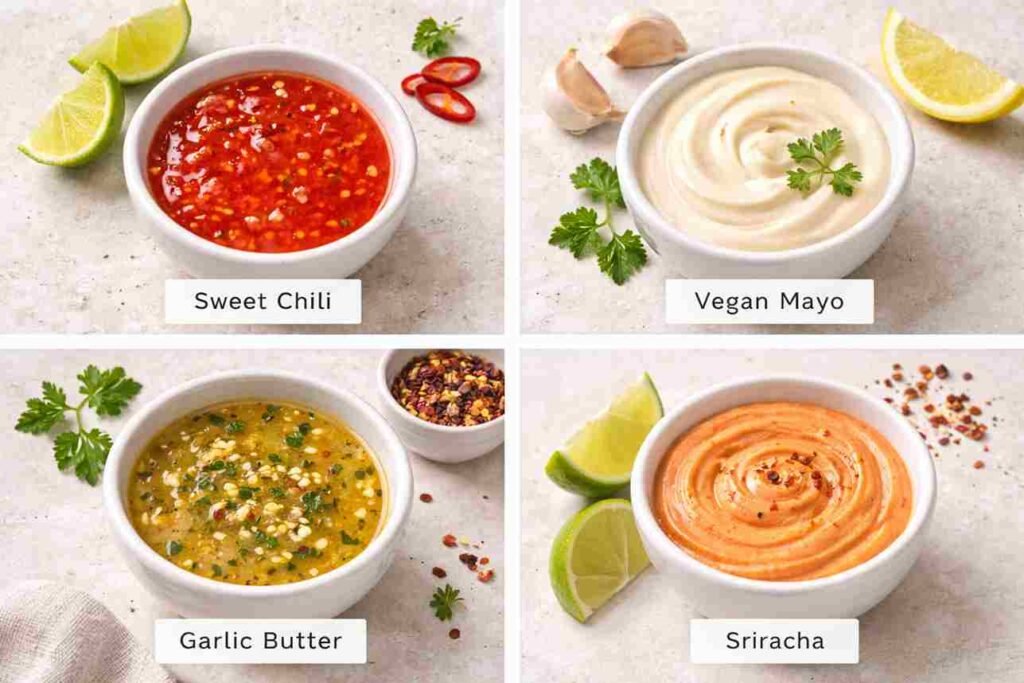
The classic pairing. The heat and sweetness of a good sweet chilli sauce complement the neutral, slightly savoury flavour of most vegan prawns perfectly. Buy good quality or make your own with red chilli, garlic, rice vinegar, sugar, and a little cornflour to thicken.
Mix vegan mayonnaise with tomato ketchup, a tiny splash of brandy or vegan Worcestershire sauce, hot sauce to taste, and a generous squeeze of lemon. Season well. This is the classic partner for any prawn cocktail preparation.
Combine vegan mayonnaise, sweet chilli sauce, sriracha, and a small amount of rice vinegar. Bang bang sauce has both creaminess and fire — it’s particularly good with deep-fried or air-fried vegan prawns.
Melt a generous amount of good quality vegan butter with plenty of finely minced garlic, a pinch of dried chilli flakes, and fresh parsley. Serve warm alongside your crispy vegan prawns. It’s luxuriously simple and works especially well if you’re serving them as part of a sharing spread.
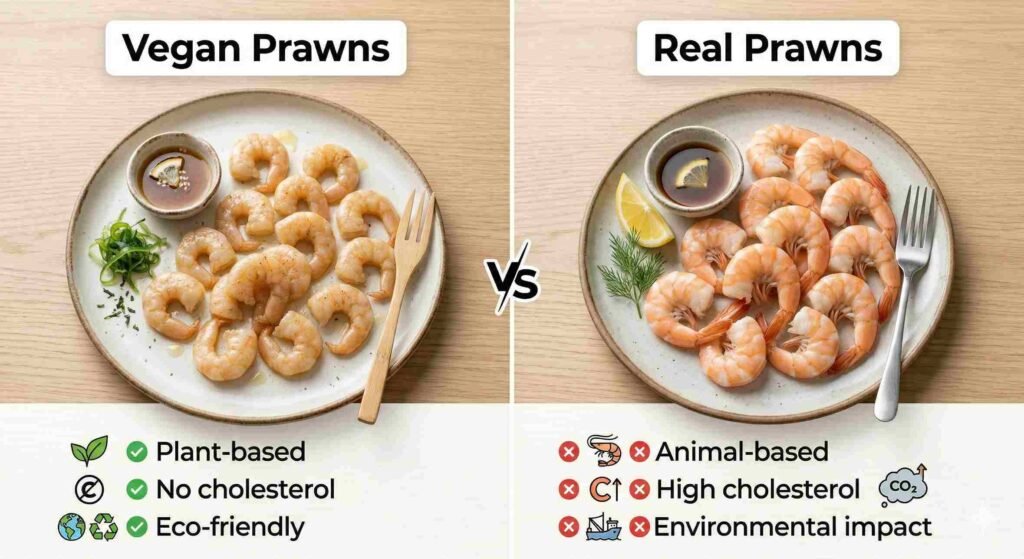
The environmental cost of conventional prawn farming is significant and well-documented by researchers. According to a study published by the Center for International Forestry Research (CIFOR) and reported by The Nature Conservancy, prawn and shrimp production produces on average 13 kg of CO₂ equivalents per kilogram of product — roughly twice the greenhouse gas emissions of salmon production.
One of the most significant factors is the destruction of mangrove forests to create farming ponds. Mangroves can sequester up to four times more carbon than terrestrial forests, according to the same research — and approximately 20% of the world’s mangroves were lost in the 1980s and 90s, largely due to shrimp and prawn farm expansion, according to data cited by The Nature Conservancy.
Conventional bottom-trawling for wild prawns also causes extensive seabed damage, and the bycatch ratio for shrimp — other marine animals caught unintentionally — can be two to ten times the tonnage of the actual shrimp landed, according to Eat Blue.
Prawn and shrimp welfare is a growing area of scientific and ethical concern. Research into crustacean sentience has advanced considerably — there is now increasing scientific recognition that these animals can experience pain and suffering.
On commercial farms, a practice called eyestalk ablation is routinely used on female breeding prawns: the eyestalk is removed or crushed to stimulate egg production. Crustacean Compassion, a UK-based non-profit, has described this as a violent procedure that causes pain, impairs sensory perception, and compromises immune function.
Beyond the ethical and environmental arguments, there are genuine personal health reasons to consider vegan prawns. Plant-based alternatives carry no risk of heavy metal contamination, no antibiotic residue (a documented concern with imported farmed shrimp, per the FDA), and no cholesterol.
They are also a genuinely inclusive food — opening up the prawn-eating experience to people with shellfish allergies, those observing plant-based diets for religious or cultural reasons, and anyone simply trying to reduce their environmental footprint through their food choices.
Not automatically. Many commercial vegan prawn products are made with wheat protein or breadcrumbs containing gluten. If you need a gluten-free option, look for products like BeLeaf's Plant-Based Shrimp, which is specifically formulated to be gluten-free, or make your own at home using rice flour or a certified gluten-free breadcrumb.
Most store-bought vegan prawns are sold frozen and can be cooked directly from frozen — check packaging instructions. Homemade vegan prawns made from king oyster mushrooms are best cooked fresh. If you've made a large batch and want to freeze them before cooking, freeze them individually on a tray first (before they touch each other), then transfer to a bag or container once solid.
Real prawns are a source of both iodine and omega-3 fatty acids (EPA and DHA). Most vegan prawn products do not naturally replicate this, though some brands formulated with algae-based ingredients or fortification can contribute towards these nutrients. A 2024 analysis in Trends in Food Science and Technology specifically called for wider fortification of seafood alternatives with omega-3 fatty acids and key vitamins. If you're relying on your diet for iodine, consider supplementing separately or speaking with a registered dietitian.
Yes, in general, vegan prawns are a perfectly suitable food for children, and they can be a great way to introduce the flavours of seafood in a totally allergen-controlled way. As with any processed food, check the sodium content, particularly for younger children, and always verify the ingredient list for your child's specific dietary needs.
Biologically, prawns and shrimp are related but distinct crustaceans — they differ in gill structure, claw number, and the way their bodies are segmented. In culinary terms, however, "prawn" is the word predominantly used in the UK, Australia, and much of Europe, while "shrimp" is the standard American term for what is often the same thing on the plate. In the world of plant-based food, vegan prawns and vegan shrimp refer to the same category of product. UK brands tend to label them as prawns; US brands tend to say shrimp. If you see either label, they're the same kind of product.
Think vegan prawns are impressive? Explore 7 surprisingly real vegan fish options that satisfy your seafood cravings—100% plant-based.
Vegan prawns have come a long way. What once meant a rubbery, vaguely fish-flavoured novelty product has evolved into a genuinely impressive category with options that satisfy on texture, flavour, and nutrition.
Whether you’re picking up a bag of Vegan Zeastar’s Crispy Lemon Shrimpz for a quick weeknight dinner, or spending a relaxed Sunday afternoon turning king oyster mushrooms into golden, panko-coated bites, there’s a version of this experience that fits your lifestyle, your budget, and your values.
The environmental case for switching is strong. The culinary case is getting stronger every year. And with the plant-based seafood market continuing to grow rapidly, the options are only going to improve.
Give vegan prawns a try — we think you’ll be pleasantly surprised.
Your choices can help protect innocent lives.
No spam. Only vegan tips, cruelty-free updates & animal awareness 🐾


 Vegan FoodBaby & MomBeautyFashionPet & Animal CareHealth & WellnessHome & Cleaning Essentials
No account yet?
Create an Account